




news
Categories
Years
2009 | 2010 | 2011 | 2012 | 2013 | 2014 | 2015 | 2016 | 2017 | 2018 | 2019 | 2020 | 2021 | 2022 | 2023 | 2024 | 2025 | 2026 |
2009 | 2010 | 2011 | 2012 | 2013 | 2014 | 2015 | 2016 | 2017 | 2018 | 2019 | 2020 | 2021 | 2022 | 2023 | 2024 | 2025 | 2026 |
Last News
Results 21 - 40 of 90.
Health - Psychology - 26.01.2026
Mental health care in Vienna
As part of the WWTF-funded STREAMLINE project, the scientific team led by Judit Simon, Professor of Health Economics at MedUni Vienna, has conducted the first comprehensive analysis of the provision, utilisation and costs of mental health services in Vienna. The results reveal structural imbalances in the provision of care, regional differences in utilisation and a lack of transparency regarding the actual costs of individual services.
Physics - Chemistry - 20.01.2026
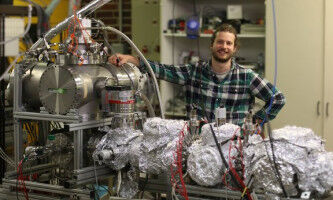
At the Department of Ion Physics and Applied Physics at the University of Innsbruck, a research team has succeeded for the first time in storing electrically charged helium nanodroplets in an ion trap for up to one minute. This extends the time window for experiments with these extremely cold "mini-laboratories" by a factor of 10,000 compared to previous methods - and opens up new possibilities for basic research in physics and chemistry.
Chemistry - Life Sciences - 20.01.2026
Researchers at TU Graz and the University of Graz can use the technology to construct artificial biocatalysts. These new enzymes are significantly faster, more stable and more versatile than previous artificial biocatalysts. Enzymes with specific functions are becoming increasingly important in industry, medicine and environmental protection.
Innovation - Environment - 15.01.2026

Physics - Materials Science - 15.01.2026

How are superconductivity and magnetism connected? A puzzling relation between magnetism and superconductivity in a quantum material has lingered for decades - now a study from TU Wien offers a surprising new explanation. Some materials conduct electricity without any resistance when cooled to very low temperatures.
Physics - Chemistry - 15.01.2026
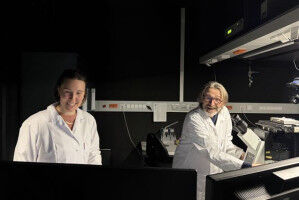
A remarkable success has been achieved at TU Wien: by combining two fundamentally different microscopy techniques, researchers can now measure the optical properties of a sample with pinpoint accuracy. The original goal was to investigate biological samples on a molecular scale - but this soon led to stubborn technical problems.
Physics - 15.01.2026
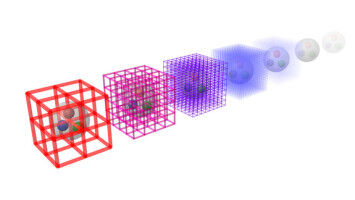
An old puzzle in particle physics has been solved: How can quantum field theories be best formulated on a lattice to optimally simulate them on a computer? The answer comes from AI. Quantum field theories are the foundation of modern physics. They tell us how particles behave and how their interactions can be described.
Physics - Microtechnics - 15.01.2026

Nanomechanical systems developed at TU Wien have now reached a level of precision and miniaturization that will allow them to be used in ultra-high-resolution atomic force microscopes in the future. A major leap in measurement technology begins with a tiny gap of just 32 nanometers. This is the distance between a movable aluminum membrane and a fixed electrode, together forming an extremely compact parallel-plate capacitor-a new world record.
Environment - Earth Sciences - 13.01.2026
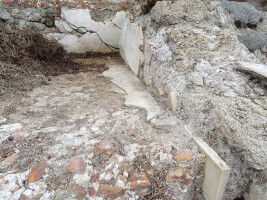
A new study by researchers from Mainz, Oxford, Berlin and Innsbruck shows that Pompeii's early baths were much less hygienic than long assumed. Geochemical analyses of lime deposits from the city's wells and pools reveal severe contamination and shed light on the ancient water supply in Pompeii. Innsbruck geologist Christoph Spötl was involved in the study published in the scientific journal PNAS.
Social Sciences - Politics - 13.01.2026

Political opinion polls can do two things: they can reflect public opinion or they can shape public opinion. Florian Woschnagg and Matthias Karmasin recently conducted a study on the credibility of political opinion polls and how they are perceived - depending on the type of medium that commissions and publishes the opinion poll.
Health - Pharmacology - 13.01.2026
New combination therapy for frequent form of lung cancer
A research team at the Medical University of Vienna has discovered a new approach to treating a particularly frequent and difficult-to-treat form of lung cancer. The study shows that a combination of two well-studied classes of drugs - ERBB inhibitors and Aurora kinase inhibitors - is significantly more effective against KRAS-mutated lung adenocarcinomas than existing therapies.
Health - Life Sciences - 09.01.2026
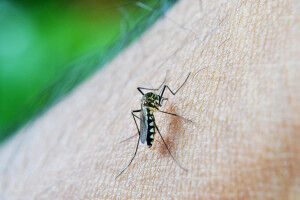
A long-term study by the Center for Virology at the Medical University of Vienna shows a significant increase in cases of West Nile virus in Austria. In 2024, 37 confirmed cases were recorded, more than ever before since the virus was first detected in 2009. For the first time, northern Burgenland was particularly affected, with the virus spreading much more widely than in previous years.
Physics - Life Sciences - 08.01.2026

Inspired by biological systems, materials scientists have long sought to harness self-assembly to build nanomaterials. The challenge: the process seemed random and notoriously difficult to predict. Now, researchers from the Institute of Science and Technology Austria (ISTA) and Brandeis University have uncovered geometric rules that act as a master control panel for self-assembling particles.
Health - 08.01.2026

A research team led by the Medical University of Vienna and the University of Vienna has investigated a possible link between the rising number of people with chronic inflammatory bowel disease and the increasing exposure to microand nanoplastics (MNPs). The research shows that plastic particles influence the immune cells and the intestinal microbiome and can thus increase inflammation.
Life Sciences - 05.01.2026
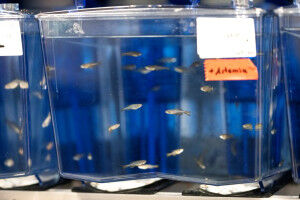
Life begins with a single fertilized cell that gradually transforms into a multicellular organism. This process requires precise coordination; otherwise, the embryo could develop serious complications.
Health - Life Sciences - 23.12.2025
New findings on Candida auris open up potential targets for future therapies
A new study involving the Medical University of Vienna shows how the multi-resistant fungus Candida auris utilises carbon dioxide (CO2) to survive on the skin and become resistant to antifungal therapies. The research team identified several new targets that could be used in the future to curb the spread and infections caused by Candida auris.
Health - Materials Science - 17.12.2025
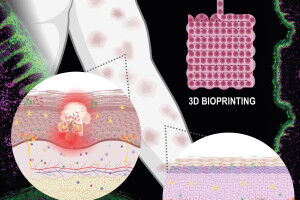
In cooperation with MedUni Vienna, researchers at TU Vienna have investigated how 3D bioprinting can be used specifically to produce complex skin models as part of a recent review. The study shows that, by using suitable biomaterials and precise printing technologies, it is possible to create multi-layered skin structures into which immune cells can also be integrated - a decisive step in advancing research into chronic inflammatory skin diseases such as psoriasis.
Physics - 16.12.2025

Researchers at TU Wien and the Okinawa Institute of Science and Technology (OIST) have demonstrated an unexpected effect: in a quantum system that is highly disordered, coherent microwave radiation can suddenly emerge. Two candles emit twice as much light as one. And ten candles have ten times the intensity.
Health - Environment - 11.12.2025
Environment and Climate Shape Regional Patterns of Allergic Sensitization
Allergic sensitization follows distinct regional patterns, and molecular IgE profiling can reveal these profiles in detail. An international research team has now demonstrated both phenomena in a population-based study of 1,000 adults from five cities in Türkiye that represent distinct climate zones.
Health - Pharmacology - 11.12.2025
Potential biomarker for targeted psoriasis therapy discovered
A research team led by Erwin F. Wagner from the Medical University of Vienna has discovered a previously unknown molecular mechanism that contributes to the development of psoriasis - and at the same time represents a potential biomarker for a new treatment concept. The study published in Cell Death & Differentiation shows that a specific fatty acid-binding protein (FABP5) drives ferroptosis, a certain form of cell death, and amplifies inflammatory processes in the skin.


