


news 2026
Categories
Years
2009 | 2010 | 2011 | 2012 | 2013 | 2014 | 2015 | 2016 | 2017 | 2018 | 2019 | 2020 | 2021 | 2022 | 2023 | 2024 | 2025 | 2026 |
2009 | 2010 | 2011 | 2012 | 2013 | 2014 | 2015 | 2016 | 2017 | 2018 | 2019 | 2020 | 2021 | 2022 | 2023 | 2024 | 2025 | 2026 |
Results 1 - 20 of 34.
Astronomy & Space - Physics - 11.03.2026

An international research team including Stefan Kimeswenger, astrophysicist at the University of Innsbruck, has tested a new approach to studying Earth-like exoplanets. The idea is to combine a large, earth-based telescope with a "sunshade" orbiting in space. How likely are habitable exoplanets, i.e. Earth-like planets outside our solar system? This is the question behind large-scale feasibility study , a project in which Nobel Prize winners Michel Mayor and John Mather were among those involved.
Health - 10.03.2026
Severe chronic skin inflammation suppresses the development of skin cancer
Chronic inflammation is generally considered a risk factor for the development of cancer. In psoriasis, a chronic inflammatory skin disease, the link with cutaneous squamous cell carcinoma, a common form of skin cancer, has not yet been clarified. In medical practice, it has long been observed that tumours in psoriasis often do not develop directly in inflamed areas of skin.
Physics - Materials Science - 09.03.2026
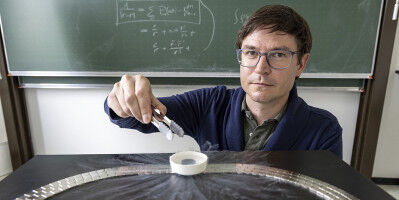
In a current strategy paper, an international team with the participation of TU Graz calls for the search for room-temperature superconductors to be pursued in a coordinated manner and with combined forces - and presents a programmatic approach for its success. The search for materials that can conduct electricity at room temperature without losing energy is one of the greatest and most consequential challenges of modern physics: loss-free power transmission, more efficient motors and generators, more powerful quantum computers, cheaper MRI devices.
Pharmacology - Life Sciences - 06.03.2026
New approach to drug development
In a recently published review, a research team led by MedUni Vienna has highlighted a promising new approach to drug discovery. The focus is on the targeted modulation of certain intracellular signalling proteins as a strategy for controlling disease-relevant signalling pathways and reducing side effects.
Health - Pharmacology - 04.03.2026
Alcohol abstinence enables regeneration even in advanced liver cirrhosis
Consistent and permanent abstinence from alcohol can lead to the regression of existing liver-related complications, even in cases of advanced alcohol-related cirrhosis. This is shown by an international multicentre study led by MedUni Vienna, which was recently published in the Journal of Hepatology.
Astronomy & Space - Physics - 03.03.2026

Observing exoplanets poses a number of challenges. In particular, planets that resemble the Earth are very difficult to study, as they only shine faintly and are outshone by their associated star. Now an international research team including Stefan Kimeswenger, astrophysicist at the University of Innsbruck, has investigated a new approach: a large, Earth-based telescope is to be combined with a "sunshade" orbiting in space that specifically blocks out the star's light.
Health - 26.02.2026
Rare diseases: Research and patient care closely linked at MedUni Vienna and University Hospital Vienna
More than 10,000 patients with rare diseases are treated annually at the University Departments of MedUni Vienna and University Hospital Vienna - many of them with long periods of suffering, delayed diagnoses, and limited treatment options. On Rare Disease Day on February 28, 2026, the Medical University of Vienna and University Hospital Vienna will demonstrate how the close link between clinical care, research, and interdisciplinary collaboration is continuously advancing the care of people with rare diseases.
Health - Life Sciences - 20.02.2026
New AI approach enables diagnosis and monitoring of brain tumours
An international research team, with significant involvement from the Medical University of Vienna, has developed a new AI-based analysis method that can accurately classify brain tumours using genetic material from cerebrospinal fluid (CSF) and monitor the progression of the disease. In future, the method could enable earlier diagnosis before surgery, reduce invasive procedures and improve the monitoring of treatment success.
Chemistry - Materials Science - 16.02.2026
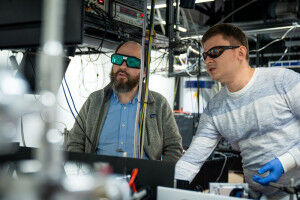
ISTA physicists explain the exceptional energy-harvesting efficiency of perovskites Despite being riddled with impurities and defects, solution-processed lead-halide perovskites are surprisingly efficient at converting solar energy into electricity. Their efficiency is approaching that of silicon-based solar cells, the industry standard.
Environment - 16.02.2026
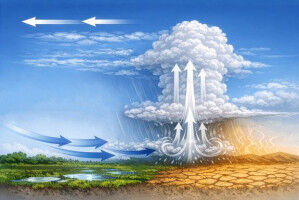
Millions of thunderstorms have now been analysed, providing new insights into the development of extreme weather events. The key lies in the combination of soil moisture and wind. Thunderstorms are known to form preferentially on warm, humid days with unstable air. But predicting where exactly a thunderstorm will develop has so far remained extremely difficult.
Physics - 16.02.2026
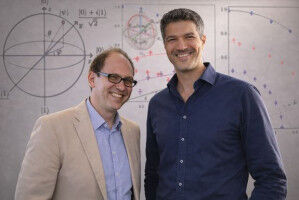
Researchers at TU Wien and IASBS have shown that the way different quantum measurements influence one another can be captured in a surprisingly simple formula. One of the most striking features of quantum physics is that certain properties cannot be measured at the same time. Every measurement may inevitably affects the object's physical state being measured - and therefore also the outcome of any subsequent measurement.
Physics - Computer Science - 16.02.2026
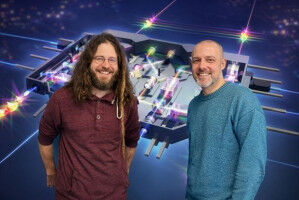
Together with a team in China a team at TU Wien extends the capabilities of quantum computers: Instead of combinations of 0s and 1s, the new technology uses four different states simultaneously.
Environment - Earth Sciences - 11.02.2026

New BOKU study provides important insights into previously poorly understood processes at the boundary between water and the atmosphere. Microalgae - tiny plants that live in water - release certain gases that can contribute to the formation of clouds in the atmosphere. Dimethyl sulphide (DMS), a sulphur gas that influences cloud formation, among other things, and thus indirectly controls the Earth's climate, is particularly important.
Environment - Earth Sciences - 10.02.2026

The new holistic monitoring system developed under the leadership of TU Graz measures boat waves with millimetre precision using satellite navigation data and sensors on buoys and for the first time allows investigations into the extent to which boat traffic, weather and other factors influence the ecosystem of lakes.
Health - Pharmacology - 09.02.2026

A research team led by Helena Niziolek and Peter Wolf from the Department of Medicine III at the Medical University of Vienna has investigated whether drug-induced reduction of cortisol production can cause metabolic changes in patients with hormonally active adrenal adenoma. The results show for the first time that treatment with the cortisol synthesis inhibitor metyrapone is associated with measurable positive effects on liver and sugar metabolism.
Transport - 05.02.2026

Insulated joint systems are crucial for safe railway operation, but are susceptible to faults. The newly developed insulated joint is intended to extend service life and reduce maintenance and repair costs. Insulated joints are little known, but many railway lines could not be used without them. They divide the rail network into electrically separated sections and register when a train enters and leaves a section.
Materials Science - 04.02.2026
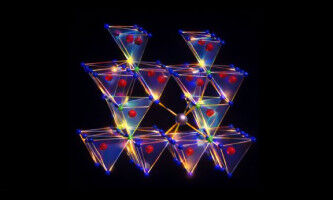
An international collaboration involving researchers from the University of Innsbruck has developed a novel luminescent material that enables particularly robust and precise optical temperature sensing across an exceptionally broad temperature range. Optical luminescence thermometry has been gaining increasing importance, as it allows contactless temperature measurement even under extreme conditions.
Health - Life Sciences - 28.01.2026
Potential and limitations of AI in biomedical research
A research team from the Medical University of Vienna and the CeMM Research Centre for Molecular Medicine has investigated how so-called AI agents could change the future of biomedical research in a recently published study. The results point to enormous potential for acceleration, but this can only be exploited if it is accompanied by reforms in the exchange and review of scientific findings, investment in shared research infrastructure and targeted support for the introduction of new tools.
Physics - Chemistry - 27.01.2026
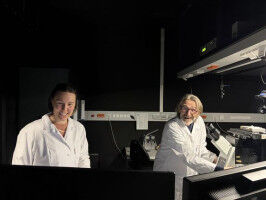
By combining completely different microscopy methods, the optical density of a sample can be measured with pinpoint accuracy. The original intention was to examine biological samples on a molecular scale and encountered stubborn problems. But then it was discovered that the cause of the annoying measurement inaccuracy, the variable refractive index of the sample, can be precisely determined and thus becomes a highly interesting measurement result itself - when two fundamentally completely different microscopy methods are combined.
Health - Psychology - 26.01.2026
Mental health care in Vienna
As part of the WWTF-funded STREAMLINE project, the scientific team led by Judit Simon, Professor of Health Economics at MedUni Vienna, has conducted the first comprehensive analysis of the provision, utilisation and costs of mental health services in Vienna. The results reveal structural imbalances in the provision of care, regional differences in utilisation and a lack of transparency regarding the actual costs of individual services.


news.myScience
Add this page to your bookmarks 
A selection of important or interesting scientific news for a wide audience.
Add this page to your bookmarks