at flag
EN DE
Login login


No account yet? Register


» Password forgotten
myScience
  • home 
    • partners
  • news 
    • 2019
    • news 2020
    • news 2021
    • news 2022
    • news 2023
    • news 2024
    • news 2025
    • news 2026
    • wire - kurze nachrichten
  • job portal 
    • job offers for scientists and academics
    • ☕ employers: post a job offer
    • other job markets
    • phd in austria
    • postdoc in austria
    • professorship in austria
    • career in industry
    • how to apply in Austria
  • events 
    • search an event related to science and research
    • announce an event on events.myScience
  • research 
    • funding
    • innovation
    • scientific information
  • directory 
    • administration
    • industrial research
    • medical research
    • research institutions
    • universities
    • universities of applied sciences
  • working in AT 
    • working conditions in Austria
    • salary of researchers in austria
    • tax system in austria
myscience.at › news › news 2026
EN DE
home
» news
job portal
events
research
directory
working in AT
news
Aktualitäten 2019
news 2020
news 2021
news 2022
news 2023
news 2024
news 2025
»
news 2026
wire - kurze nachrichten
 

news 2026

« BACK

Astronomy & Space


Results 1 - 2 of 2.


Astronomy & Space - Physics - 11.03.2026
Sun­shade helps in the search for a sec­ond Earth
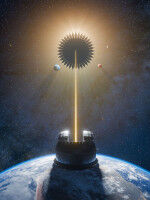
An international research team including Stefan Kimeswenger, astrophysicist at the University of Innsbruck, has tested a new approach to studying Earth-like exoplanets. The idea is to combine a large, earth-based telescope with a "sunshade" orbiting in space. How likely are habitable exoplanets, i.e. Earth-like planets outside our solar system? This is the question behind large-scale feasibility study , a project in which Nobel Prize winners Michel Mayor and John Mather were among those involved.

Astronomy & Space - Physics - 03.03.2026
Parasol helps in the search for a second earth
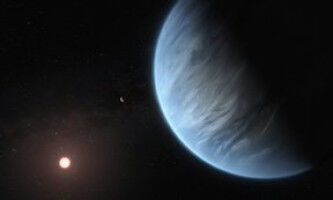
Observing exoplanets poses a number of challenges. In particular, planets that resemble the Earth are very difficult to study, as they only shine faintly and are outshone by their associated star. Now an international research team including Stefan Kimeswenger, astrophysicist at the University of Innsbruck, has investigated a new approach: a large, Earth-based telescope is to be combined with a "sunshade" orbiting in space that specifically blocks out the star's light.

Share
LinkedIn Facebook Bluesky WhatsApp Email

Sciences

Sign up

Job Portal

Events

Continuing Education

Jobmail & Alerts

INFO

About us
Partners
Privacy

COMMUNICATE

Post a job
Post an event

INTERACT

Login
Register
Contact

FIND

Sitemap
Search

SHARE

facebook

Copyright © 2008-2026 - myScience® - ISSN 2813-267X
.