



news
Categories
Years
2009 | 2010 | 2011 | 2012 | 2013 | 2014 | 2015 | 2016 | 2017 | 2018 | 2019 | 2020 | 2021 | 2022 | 2023 | 2024 | 2025 | 2026 |
2009 | 2010 | 2011 | 2012 | 2013 | 2014 | 2015 | 2016 | 2017 | 2018 | 2019 | 2020 | 2021 | 2022 | 2023 | 2024 | 2025 | 2026 |
Last News
Results 61 - 80 of 90.
Health - Pharmacology - 07.11.2025
AI models can accurately predict severe liver complications
Researchers at MedUni Vienna have tested the prognostic significance of their previously developed artificial intelligence (AI) model based on simple blood tests. The Vienna 3P/5P models, which are using just three or five routine laboratory parameters, can predict the clinical course of patients with advanced chronic liver disease - without invasive procedures or the need for special equipment.
Physics - Chemistry - 03.11.2025
How silver iodide seeds ice: TU Wien researchers uncover how a tiny crystal triggers ice formation at the atomic level No one can control the weather, but certain clouds can be deliberately triggered to release rain or snow. The process, known as cloud seeding, typically involves dispersing small silver iodide particles from aircraft into clouds.
Health - Life Sciences - 31.10.2025
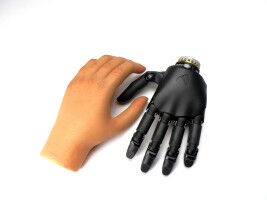
Despite enormous progress in the past two decades, the intentional control of bionic prostheses remains a challenge and the subject of intensive research. Now, scientists at the Medical University of Vienna and Imperial College London have developed a new method for precisely detecting the nerve signals remaining after an arm amputation and utilising them to control an artificial arm.
Health - Pharmacology - 30.10.2025
New Cancer Drug Shows Exceptional Tumor-Fighting Potential
A research team led by the Medical University of Vienna, the HUN-REN Research Centre for Natural Sciences and the Eötvös Loránd University in Budapest has developed a groundbreaking new chemotherapeutic agent, LiPyDau, which shows remarkable efficacy against multiple tumor types in preclinical studies.
Physics - Chemistry - 28.10.2025

A puzzle in theoretical chemistry has been solved at TU Wien: a new computational method now makes it possible to calculate the forces between large molecules with unprecedented accuracy. Why can geckos walk up walls? Why does nitrogen become liquid at -196 °C? Many everyday phenomena can be explained by van der Waals forces - weak bonds between molecules that are notoriously difficult to calculate.
Health - Pharmacology - 28.10.2025
New therapy for active brain metastases successfully tested
An international clinical study led by the Medical University of Vienna shows that the drug patritumab deruxtecan (HER3-DXd) can have a promising effect in patients with active brain metastases of various tumour types. Patients with advanced disease benefited from treatment in both non-small cell lung cancer (NSCLC) and metastatic breast cancer, as shown in two simultaneous publications in The Lancet Oncology.
Physics - Chemistry - 27.10.2025
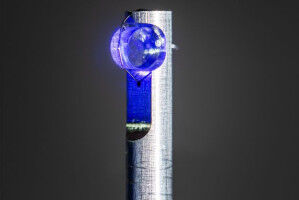
In 2024, TU Wien presented the world's first nuclear clock. Now it has been demonstrated that the technology can also be used to investigate unresolved questions in fundamental physics. Thorium atomic nuclei can be used for very specific precision measurements. This had been suspected for decades, and the search for suitable atomic nucleus states had been ongoing worldwide.
Materials Science - Physics - 22.10.2025
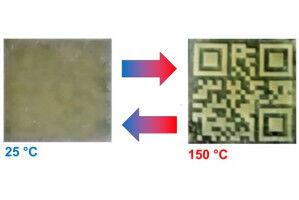
Materials that react to temperature: a development by TU Wien is now significantly expanding the possible applications of 3D printers. 3D printing is extremely practical when you want to produce small quantities of customised components. However, this technology has always had one major problem: 3D printers can only process a single material at a time.
Life Sciences - Health - 22.10.2025
New insights into rare type of brain tumour in children
Researchers at the Medical University of Vienna and the Dana-Farber Cancer Institute in Boston have deciphered the cellular and molecular mechanisms of a very rare and particularly aggressive type of cancer in children: embryonic tumour with multilayered rosettes (ETMR). The study results, published in the journal Nature Cancer, open up new perspectives for targeted treatment strategies.
Earth Sciences - Environment - 21.10.2025
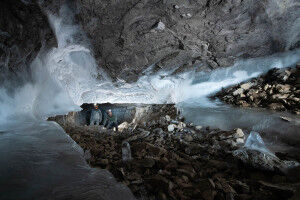
In a remote cave in northern Greenland, a research team led by geologists Gina Moseley, Gabriella Koltai and Jonathan Baker from the University of Innsbruck has discovered traces of a significantly warmer Arctic. The cave deposits show that the region was free of permafrost millions of years ago and reacted sensitively to rising temperatures.
Health - Pharmacology - 21.10.2025
New approach to prostate cancer treatment
An international research team led by the Medical University of Vienna has demonstrated for the first time that thyroid hormone plays a key role in the development and progression of prostate cancer. By blocking a specific thyroid hormone receptor, cancer growth was inhibited in both animal models and tumour cell cultures.
Physics - 20.10.2025

What happens when electrons leave a solid material? This seemingly simple phenomenon has, until now, eluded accurate theoretical description. Now, researchers have found the missing piece of the puzzle. Imagine a frog sitting inside a box. The box has a large opening at a certain height. Can the frog escape? That depends on how much energy it has: if it can jump high enough, it could in principle make it out.
Health - Life Sciences - 20.10.2025
Previously unknown mechanism in pre-eclampsia discovered
Pre-eclampsia is one of the most serious complications in pregnancy, affecting millions of women and newborns worldwide and potentially life-threatening. Despite intensive research, it has remained unclear what processes in the placenta lead to the disease. Now, a research team led by the Medical University of Vienna has discovered a previously unknown mechanism that plays a decisive role in the development of pre-eclampsia.
Health - Life Sciences - 17.10.2025
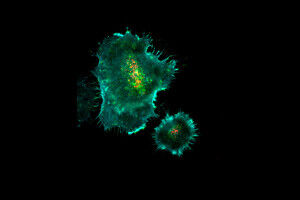
When immune cells strike, precision is everything. New research reveals how natural killer and T cells orchestrate the release of toxic granules - microscopic packages that destroy virus-infected or cancerous cells. The study led by researchers from CeMM, St. Anna CCRI, MedUni Vienna, Med Uni Graz, the University Hospital Bonn (UKB) and the University of Bonn, published in Science Immunology, uncovers an unexpected link between lipid metabolism and the immune system's ability to deliver its lethal cargo, offering new insights into diseases caused by genetic defects.
Life Sciences - Health - 16.10.2025
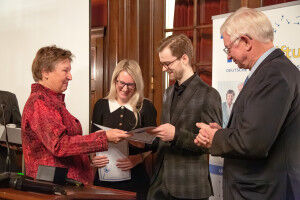
A research team from the Medical University of Vienna and the Medical University of Graz has discovered a previously unknown genetic cause of hereditary optic atrophy, a degenerative disease of the optic nerve associated with gradual loss of vision. The results, currently published in the journal Genetics in Medicine, open up new possibilities for the genetic diagnosis of this disease and provide important approaches for future research into the underlying disease mechanisms.
Health - 15.10.2025

Researchers at the Medical University of Vienna have taken a closer look at a previously largely unknown component of the immune system: the protein molecule TRAT1 (T Cell Receptor Associated Transmembrane Adaptor 1) plays a central role in how so-called T helper cells (a specialised subgroup of immune cells) distinguish between attack and self-control - an important mechanism for restraining inflammation and preventing autoimmune diseases.
Environment - Earth Sciences - 14.10.2025
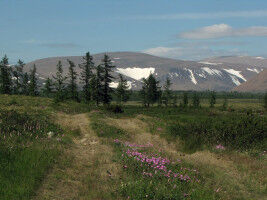
Researchers and the changing Siberian landscape The Arctic tundra is not only a place of untouched nature, but also a hotspot for ecological change. Researchers studying the fragile balance of the tundra are uncovering alarming signs: the disappearance of lichens and the increase in fires mark the start of a chain reaction with potential global consequences.
Environment - Innovation - 13.10.2025

ISTA study confirms: Glaciers are fighting a losing battle against climate change Glaciers are fighting back against climate change by cooling the air that touches their surfaces. But for how long? The Pellicciotti group at the Institute of Science and Technology Austria (ISTA) has compiled and re-analyzed an unprecedented dataset of on-glacier observations worldwide.
Health - 13.10.2025

In a world first, a novel diaphragmatic valve was used to treat benign pleural effusions in two patients at the Department of Thoracic Surgery at MedUni Vienna and University Hospital Vienna. This represents an important step forward in the treatment of this common and debilitating condition, which can improve patients' quality of life with just a single procedure.
Life Sciences - Physics - 13.10.2025

Researchers at the Johannes Kepler University Linz, together with British colleagues, have disproved an old theorem of biochemistry. Their discovery in the field of photosynthesis could mean a long-term breakthrough towards higher agricultural yields. A large part of life on our planet is made possible by photosynthesis.


