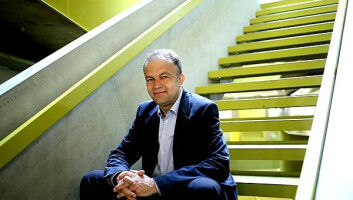
Gernot Müller-Putz from the Institute of Neurotechnology at TU Graz is part of an EU project to develop a brain-computer interface that can decode language in real time from brain signals. He is still looking for interested young researchers to join the project team.
Gernot Müller-Putz from the Institute of Neurotechnology at TU Graz is part of an EU project to develop a brain-computer interface that can decode language in real time from brain signals. He is still looking for interested young researchers to join the project team. By Susanne Filzwieser - People with locked-in syndrome (LIS) are enormously restricted in their communication. Implantable brain-computer interfaces that decode speech in real time from brain signals should help free users from isolation. People with degenerative diseases of muscle-controlling nerves such as ALS (amyotrophic lateral sclerosis) are at risk of losing complete muscle control. This leads to locked-in syndrome (LIS), where the affected person is completely paralysed and can no longer communicate despite still being fully aware - a frightening and extremely challenging situation for the affected person, their family and also the nursing staff. A European research consortium led by the Dutch University Medical Center UMC Utrecht and with participation of TU Graz has now been selected for funding by EU grant of almost 6 million euros from the European Innovation Council (Pathfinder Programme).
UM DIESEN ARTIKEL ZU LESEN, ERSTELLEN SIE IHR KONTO
Und verlängern Sie Ihre Lektüre, kostenlos und unverbindlich.