



chemistry
Enhancing Nature’s Catalysts

Advances in protein engineering have led scientists to explore the potential of enzymes in new ways, enabling them to catalyze reactions that do not occur in nature. By establishing her research group at the Institute of Science and Technology Austria (ISTA) in February, synthetic chemist Julia Reisenbauer will focus on repurposing enzymes' unique reactivity to unlock entirely new chemical pathways. Her research could find broad applications in medicine, therapeutics, agriculture, materials science, and sustainable chemical processes.
Green Hydrogen without Forever Chemicals and Iridium
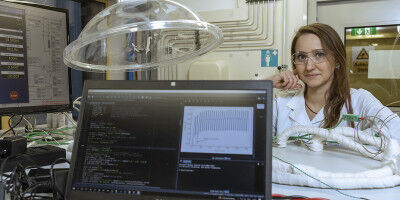
In the EU project SUPREME, an international research team with the participation of TU Graz is developing an electrolyser to produce green hydrogen more sustainably and efficiently.
Discovered by chance: the refractive index microscope
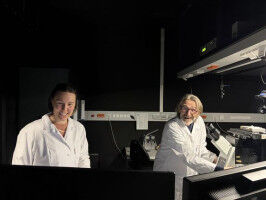
By combining completely different microscopy methods, the optical density of a sample can be measured with pinpoint accuracy.
New AI Method Revolutionises the Design of Enzymes
Researchers at TU Graz and the University of Graz can use the technology to construct artificial biocatalysts. These new enzymes are significantly faster, more stable and more versatile than previous artificial biocatalysts.
Next-Generation Solar Cells
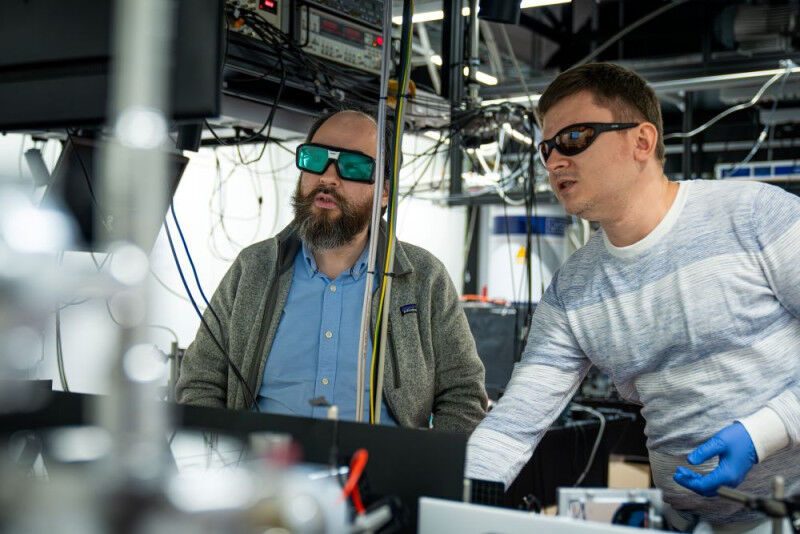
ISTA physicists explain the exceptional energy-harvesting efficiency of perovskites. Despite being riddled with impurities and defects, solution-processed lead-halide perovskites are surprisingly efficient at converting solar energy into electricity.
Ion trap enables one minute in the nanocosmos
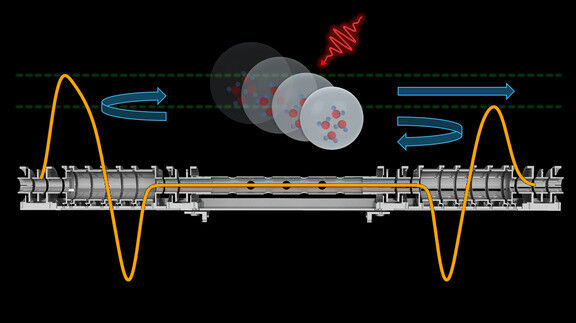
At the Department of Ion Physics and Applied Physics at the University of Innsbruck, a research team has succeeded for the first time in storing electrically charged helium nanodroplets in an ion trap for up to one minute.
Discovered by chance: the refractive-index microscope
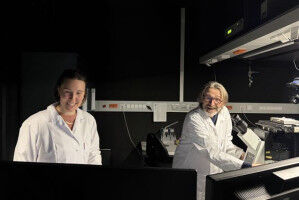
A remarkable success has been achieved at TU Wien: by combining two fundamentally different microscopy techniques, researchers can now measure the optical properties of a sample with pinpoint accuracy.
Selected Jobs
Wissenschaftliche*r Mitarbeiter*in mit Doktorat (40 WStd., Ers.Kr.) Universität für Bodenkultur Wien


