Patterns of particles generated by surface charges
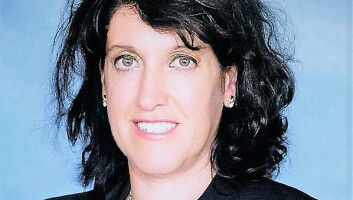
Disorder turns into order: scientists at the Vienna University of Technology can show how intricate structures can emerge from inhomogeneously charged particles. Tuning the material structure at the nanoscale level can be really hard to achieve - but what if we had small particles, which assemble all by themselves, creating the required structure? At the Vienna University of Technology (TU Wien), the phenomenon of self-assembly is being investigated by studying inhomogeneously charged particles. Depending on different parameters, they can form gel-like or crystal-like structures. This kind of self-assembly holds great promise for nanotechnology. Micro Particles with Specially Structured Surfaces - Emanuela Bianchi is a scientist in Prof. Gerhard Kahls research group at the Institute for Theoretical Physics of the Vienna University of Technology. In her computer simulations, she reproduces the bahavior of particles which are no bigger than a few micrometers - comparable to viruses or small bacteria. She is especially interested in nanoparticles with a complicated surface, consisting of different kinds of patches distinguished by different physical properties.