From April to September 2024, public buses in four Austrian federal states served as mobile insect researchers. Using modern DNA analyses, 3,455 different insect species were identified - including rare and invasive species. The method opens up new perspectives for insect conservation in times of biodiversity crisis.
Insects perform essential tasks in almost all ecosystems: Flying insects pollinate around 80 percent of our wild and crop plants, beetle and fly larvae support the nutrient cycle in the soil, some insect species (e.g. ladybugs, ichneumon wasps) regulate pest infestations. At the same time, the six-legged creatures are food for other animals and thus a central link in the food chain.
The biodiversity and population strength of insects is constantly declining due to changing environmental conditions (dwindling habitats, global warming). Ecosystems are becoming unbalanced - with direct consequences for us humans.
Map of the insect population
Large-scale monitoring that provides information about the occurrence and habitat and allows conclusions to be drawn about changes - for example in connection with global warming - forms the basis for targeted insect protection, but also for the detection of unwelcome species such as invasive pests or disease vectors.
Conventional insect monitoring with landing nets or traps is costly and time-consuming and only allows insect occurrence to be recorded on a small scale. A new concept was tested at the University of Innsbruck last year: a team led by Prof. Michael Traugott from the Institute of Zoology initiated the "Insect Bus Monitoring" project.
Postbus or insect collector?
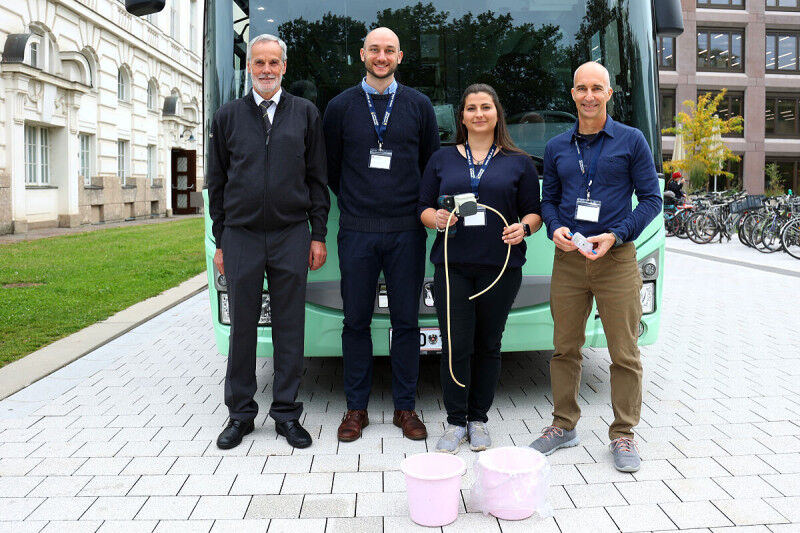
"The new approach saves resources and time," explains Traugott. "We use DNA analysis to evaluate the so-called road kill, i.e. flying insects captured on the windshield in road traffic. This means that no additional insects are killed as a result of monitoring."Postbuses on a total of 16 bus routes in Tyrol, Carinthia, Lower Austria and Upper Austria served as "insect collectors" in the service of science from April to September 2024.
The researchers cleaned the windscreens and front areas of the buses with microfiber cloths three times a month at the end of each working day. These were then washed out several times. The scientists extracted the insect DNA (known as eDNA) from the water using special filters. This was extracted, amplified and sequenced in the laboratory in collaboration with Sinsoma GmbH. A comparison with international DNA databases provided information about the insect species recorded.

3.455 insect species recorded by buses
Around 40,000 different insect species live in Austria. "It is estimated that 80 percent of them are able to fly at least some of the time," explains Traugott. "Interestingly, some flightless species were also recorded by the buses."In the four federal states sampled, the research team identified 3,455 different insect species as well as some spider and other arthropod species. Among the insects, the order of Diptera - i.e. dipterans - was most frequently represented with around 1,900 different species. This order includes, for example, hoverflies, houseflies and mosquitoes.
The second largest group was the order of beetles (400 species), followed by butterflies (260 species), bugs and cicadas (210 species) and Hymenoptera (190 species), which include bees, bumblebees and wasps.
Species diversity: Spatial and temporal differences
Significant differences in the composition of insect communities were found in a comparison of the federal states: Just under 500 species were recorded in all four federal states. However, between 250 and 500 species were only discovered in one federal state. "This shows that bus monitoring is well suited to recording local insect communities," says Traugott.
The DNA traces of the insects showed a high degree of correspondence with the habitats of the individual species. If a bus route ran predominantly through forests, DNA was mainly found from forest insects. On routes through agricultural land, insects from open land were strongly represented. "This may sound unsurprising, but it shows how reliably monitoring by bus works," says the project manager.
Differences between the federal states were also evident in the timing: "While we documented the greatest species diversity in Upper and Lower Austria in spring and early summer, this shifted to July and August in Tyrol and Carinthia. The altitude is the key factor here," explains Marjana Ljubisavljevic, project coordinator of the research project. The temporal course of the insect occurrence is an important indicator, especially against the background of global warming.
Welcome or unwelcome?
Among the insects recorded, the scientists discovered some rare species: the lesser mantis was last recorded in Austria in the 1960s. It was assumed that the species had become extinct in the meantime, but now DNA traces prove its presence in Tyrol.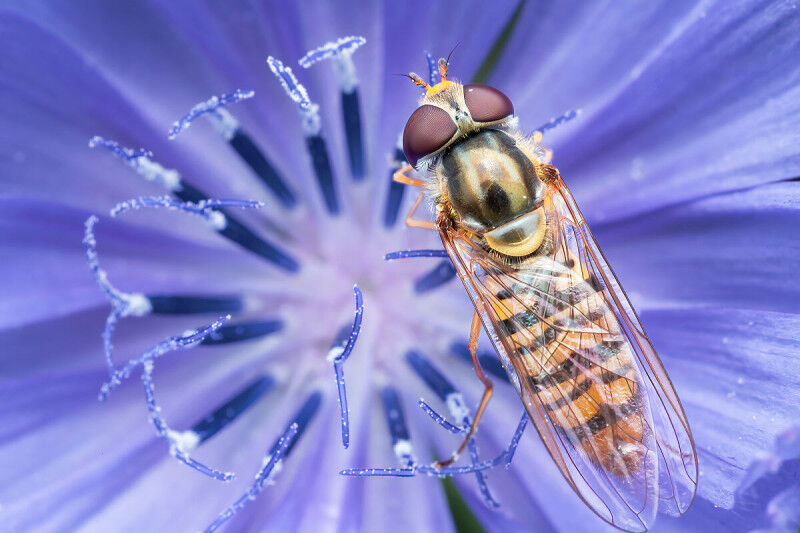
Counterparts of insect pests were also frequently detected, "including the wood hoverfly or the seven-spot ladybug, which is still widespread despite rising temperatures," says Ljubisavljevic.
The method also allows the regional occurrence of potentially disease-transmitting mosquitoes to be recorded, enabling health risks to be identified at an early stage.