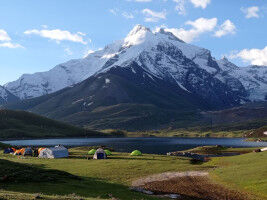
Caption: This image shows the Artesonraju Glacier in Cordillera Blanca, Peru. Photo credit: Ben Marzeion
By combining climate and glacier models, scientists headed by Ben Marzeion from the University of Innsbruck have found unambiguous evidence for anthropogenic glacier mass loss in recent decades. In a paper published in Science, the researchers report that about one quarter of the global glacier mass loss during the period of 1851 to 2010 is attributable to anthropogenic causes. The fraction of human contribution increased steadily and accelerated to almost two thirds between 1991 and 2010. The ongoing global glacier retreat causes rising sea-levels, changing seasonal water availability and increasing geo-hazards. While melting glaciers have become emblematic of anthropogenic climate change, glacier extent responds very slowly to climate changes. "Typically, it takes glaciers decades or centuries to adjust to climate changes," says climate researcher Ben Marzeion from the Institute of Meteorology and Geophysics of the University of Innsbruck. The global retreat of glaciers observed today started around the middle of the 19th century at the end of the Little Ice Age.
TO READ THIS ARTICLE, CREATE YOUR ACCOUNT
And extend your reading, free of charge and with no commitment.