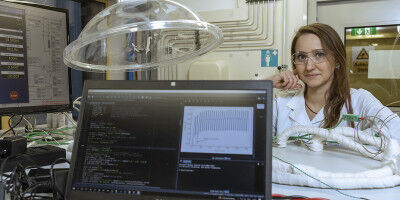
Hertha Firnberg Scholar Kateryna Lypetska is conducting intensive research to understand synthesis processes and optimise them for industrial production.
Mimicking evolution in the lab: Kateryna Lypetska takes us on a foray into the world of biocatalysis, which enables an ecological production of pharmaceuticals to be carried out. . "Nature is the best chemist: she has developed synthesis processes which are unsurpassed with respect to specificity and efficiency," enthuses Kateryna Lypetska. The 34-year-old researcher from Ukraine is conducting intensive research at TU Graz to understand synthesis processes and optimise them for industrial production. "With the further development of molecular biological and genetic engineering methods, more and more possibilities are being opened up to carry out tailor-made, biocatalytic conversions of materials," says the Hertha Firnberg Scholar who is working at the Institute of Organic Chemistry. Enzymes as universal active agents. The research area of Kateryna Lypetska is biocatalysis, in which enzymes accelerate chemical reactions or at least initiate them.
TO READ THIS ARTICLE, CREATE YOUR ACCOUNT
And extend your reading, free of charge and with no commitment.
Your Benefits
- Access to all content
- Receive newsmails for news and jobs
- Post ads