1/2 images
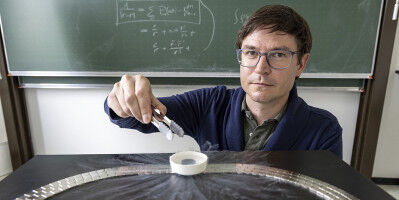
1/2 images A new spectroscopy method has been developed at TU Wien: Using a series of laser pusles, chemical analyses can be carried out much faster and more precisely than before. Whether you want to analyze environmental samples in nature or monitor a chemical experiment, you often need highly sensitive sensors that can "sniff out" even tiny traces of a certain gas with extreme accuracy. Variants of Raman spectroscopy are often used for this purpose: Different molecules react in very characteristic ways to light of different wavelengths. If you irradiate a sample with the appropriate light and measure exactly how the light is modified by the sample, you can find out whether the sample contains a certain gas or not. However, scientists at TU Wien (Vienna) has now taken a significant step forward in this area: a new method has been developed to generate and precisely control suitable light for such experiments. This not only enables much greater accuracy than before, the method also works without moving parts and is therefore much faster than the best technologies to date. The method has now been published in the journal "Light: Science and Applications".
TO READ THIS ARTICLE, CREATE YOUR ACCOUNT
And extend your reading, free of charge and with no commitment.