Research project on motor abnormalities in children provides practical solutions
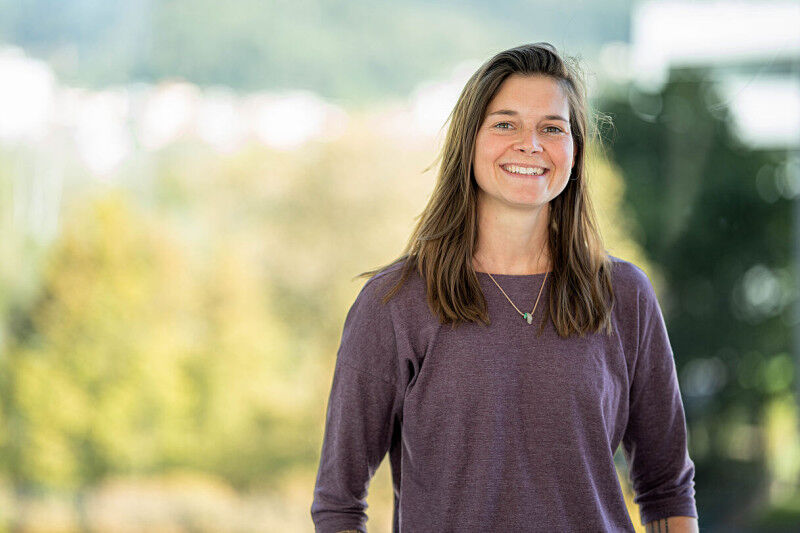
Motor abnormalities in children are often not recognized as such. This is shown by a study in 25 Tyrolean kindergartens with over 750 children. In a two-stage test, almost 5 percent of the children showed deficits in their motor development. In none of the cases did the parents interviewed beforehand express any corresponding concerns. Such deficits can also have a negative impact on other areas of development, which is why affected children can benefit greatly from supportive therapy. The head of the study, Barbara Scheiber, head of the physiotherapy bachelor’s degree program at fh gesundheit and doctoral candidate at the Institute of Sports Science at the University of Innsbruck, explains the results in an interview.
Could you briefly summarize the most important results of your study and explain why they are relevant for the early detection of motor abnormalities at preschool age?
Barbara Scheiber: Our study showed that around five percent of the preschool children examined had motor difficulties that should be supported therapeutically. It was particularly remarkable that these abnormalities often go undetected in everyday life. We know from previous studies that it is very difficult for parents and teachers to recognize such deficits at such an early stage. This was also confirmed in our project; none of the children’s parents or teachers had expressed such concerns.
This is an important indication that motor development problems often go unnoticed. Children learn to adapt or compensate for their difficulties, but this can have long-term effects on social participation, learning behavior, enjoyment of movement and self-confidence. Early recognition is therefore crucial in order to be able to provide targeted support in good time; ideally as early as kindergarten, when motor skills can still be influenced very easily.
Your study shows that parents often do not notice their children’s motor difficulties. What factors could contribute to this and how could screening supplement this awareness?
Barbara Scheiber: Many parents see their child in a familiar environment and therefore perceive minor motor uncertainties as "individual differences", not as a possible developmental disorder. In addition, there is often a lack of comparative possibilities and knowledge about typical movement sequences at this age.
Structured screening offers an objective view from the outside. It helps to identify abnormalities before they lead to learning or behavioral problems at school age. In this way, children can be consciously supported and better integrated. It is important for me to emphasize this: Screening is not a diagnosis, but a door opener. It helps parents and teachers to provide the child with targeted support and, if necessary, to arrange for further specialist clarification.
The two-stage screening in kindergartens has proven to be practicable. What steps would be necessary to introduce this approach across the board and what challenges do you see?
Barbara Scheiber: Our results show that two-stage screening, i.e. a combination of a simple movement course (possibly implemented by trained teachers) and targeted testing by physiotherapists, can be easily integrated into everyday kindergarten life. The next step would be to systematically anchor these processes, for example through further training and clear cooperation structures between educational institutions, health services and therapists.
One challenge is certainly to provide enough trained specialists and to design the process in such a way that it can be implemented in an integrative way in kindergarten. At the same time, it is a great opportunity: motor difficulties identified at an early stage can often be positively influenced with relatively little effort. This is health promotion in the best sense of the word: preventative, practical and sustainable.
Barbara Scheiber studied physiotherapy and quality and process management in healthcare at the fh gesundheit in Innsbruck. She has been researching and teaching on the physiotherapy bachelor’s program there for several years and took over as head of the physiotherapy degree program in 2022, developing a master’s program together with her team. Barbara Scheiber is about to complete her doctorate in sports science at the University of Innsbruck.
The project has been supported by Health and Science Minister Cornelia Hagele from the outset, who adds: "Barbara Scheiber’s research work closes an important gap in early health promotion. Developmental coordination disorders are often overlooked - with consequences for children’s self-confidence in everyday life and their success at school. The fact that for the first time there is a practical screening tool that starts in kindergarten is a major step forward." Hagele goes on to emphasize: "This study shows how health science has a direct impact on young people’s lives. It is a plea to focus on fields of research that have previously received little attention. It is particularly pleasing that the work is the result of close cooperation between the fh gesundheit and the University of Innsbruck - a strong sign for our science location Tyrol and what networking can achieve in research."