


news 2026
« BACK
 Next-Generation Solar Cells
 Discovered by chance: the refractive index microscope
 Ion trap enables one minute in the nanocosmos
 New AI Method Revolutionises the Design of Enzymes
 Discovered by chance: the refractive-index microscope
Chemistry
Results 1 - 5 of 5.
Chemistry - Materials Science - 16.02.2026
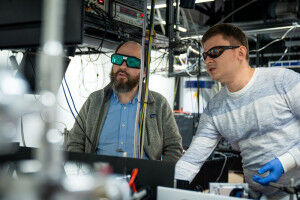
ISTA physicists explain the exceptional energy-harvesting efficiency of perovskites Despite being riddled with impurities and defects, solution-processed lead-halide perovskites are surprisingly efficient at converting solar energy into electricity. Their efficiency is approaching that of silicon-based solar cells, the industry standard.
Physics - Chemistry - 27.01.2026
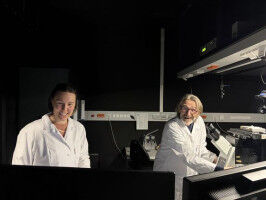
By combining completely different microscopy methods, the optical density of a sample can be measured with pinpoint accuracy. The original intention was to examine biological samples on a molecular scale and encountered stubborn problems. But then it was discovered that the cause of the annoying measurement inaccuracy, the variable refractive index of the sample, can be precisely determined and thus becomes a highly interesting measurement result itself - when two fundamentally completely different microscopy methods are combined.
Physics - Chemistry - 20.01.2026
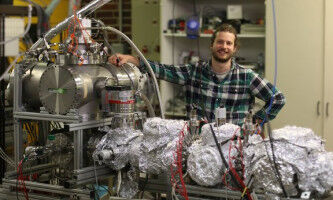
At the Department of Ion Physics and Applied Physics at the University of Innsbruck, a research team has succeeded for the first time in storing electrically charged helium nanodroplets in an ion trap for up to one minute. This extends the time window for experiments with these extremely cold "mini-laboratories" by a factor of 10,000 compared to previous methods - and opens up new possibilities for basic research in physics and chemistry.
Chemistry - Life Sciences - 20.01.2026
Researchers at TU Graz and the University of Graz can use the technology to construct artificial biocatalysts. These new enzymes are significantly faster, more stable and more versatile than previous artificial biocatalysts. Enzymes with specific functions are becoming increasingly important in industry, medicine and environmental protection.
Physics - Chemistry - 15.01.2026
A remarkable success has been achieved at TU Wien: by combining two fundamentally different microscopy techniques, researchers can now measure the optical properties of a sample with pinpoint accuracy. The original goal was to investigate biological samples on a molecular scale - but this soon led to stubborn technical problems.


