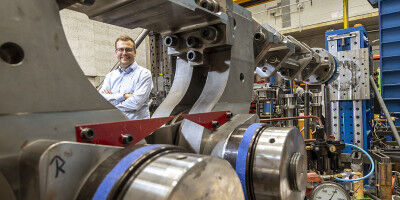
As the ’Innovation District Inffeld’, the campus is a kind of living lab for energy systems of the future. Source: Markus Kaiser - TU Graz
Smart buildings are designed to increase comfort and reduce energy consumption. Gerald Schweiger, who works on intelligent energy systems at TU Graz, knows what opportunities are opening up. As the 'Innovation District Inffeld', the campus is a kind of living lab for energy systems of the future. Source: Markus Kaiser - TU Graz What makes a building "smart"- Is it the building technology? IT from cellar to attic or the well thought-out structural and design interpretation for people and their everyday life in and around buildings? "A smart building knows what is happening both inside it and all around it thanks to suitable sensor technology and the data generated by it, and a higher-level artificial intelligence automatically adjusts the building's operation depending on defined targets - at least, that's the short version," says Gerald Schweiger. He conducts research into smart energy systems at the Institute of Software Technology at TU Graz and sees buildings, along with mobility, as the prime application for smart things. Sensor systems as a basis. There are three basic requirements that a building must fulfil in order to come close to the smart building category.
TO READ THIS ARTICLE, CREATE YOUR ACCOUNT
And extend your reading, free of charge and with no commitment.