



Pharmacology - Mar 16
Detail-oriented and data-driven: Pharmaceutical Sciences graduate Elisabeth Schweiberer
Detail-oriented and data-driven: Pharmaceutical Sciences graduate Elisabeth Schweiberer
Health - Mar 13
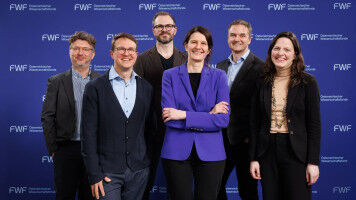
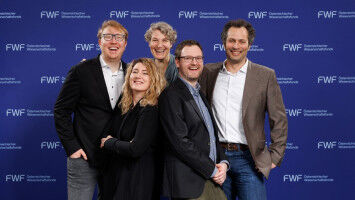
Matthias Farlik-Födinger receives Paul Langerhans Prize from the Dermatological Research Working Group
Matthias Farlik-Födinger receives Paul Langerhans Prize from the Dermatological Research Working Group

wire - kurze nachrichten
Chemistry
Results 101 - 137 of 137.
Chemistry - Physics - 19.06.2017

Chemistry - Life Sciences - 23.03.2017

Chemistry - Social Sciences - 20.03.2017
Materials Science - Chemistry - 20.03.2017

Chemistry - Life Sciences - 16.03.2017

Mimicking evolution in the lab: Kateryna Lypetska takes us on a foray into the world of biocatalysis, which enables an ecological production of pharmaceuticals to be carried out.
Chemistry - Physics - 14.03.2017
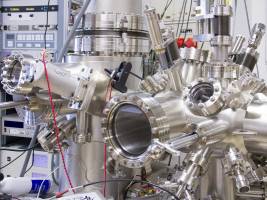
At TU Wien (Vienna), it has become possible to control one of the most important chemical processes: switching oxygen molecules between a reactive and unreactive state.
Chemistry - 06.03.2017
Pan-European Seal Traineeship Program - now open for applications
Physics - Chemistry - 02.02.2017

Physics and philosophy are Andreas Hauser's specialities. He has a doctorate in both, but professionally, physics comes first.
Chemistry - Campus - 30.11.2016
Appreciation award for TU Graz chemist and architect
Physics - Chemistry - 14.11.2016

Round about 65 years ago, the first electron microscope was set up at TU Graz, thus laying a foundation stone for many years of successful research work In 1951, the first electron microscope - the U
Chemistry - 21.10.2016

Physics - Chemistry - 20.10.2016
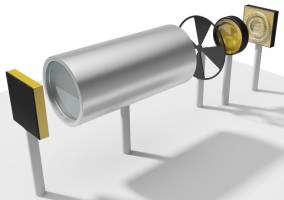
A laser and detector in one: a microscopic sensor has been developed at TU Wien, which can be used to identify different gases simultaneously.
Physics - Chemistry - 12.10.2016
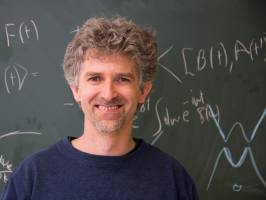
The solid state physicist Jan Kune? is relocating his research project from Prague to Vienna, bringing another ERC Consolidator Grant to TU Wien.
Chemistry - Physics - 06.10.2016

uni:view magazin Videos Presse Social Media The Nobel Prize in Chemistry 2016 has been awarded to Jean-Pierre Sauvage, Sir Fraser J. Stoddart and Bernard L. Feringa for the design and synthesis of molecular machines.
Chemistry - Mechanical Engineering - 27.09.2016

A novel method for curing of epoxy resins has been developed at TU Wien. Local UV flashes initiate a chemical cascade and cure the entire material.
Physics - Chemistry - 27.07.2016
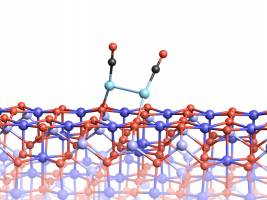
The remarkable behaviour of platinum atoms on magnetite surfaces could lead to better catalysts. Scientists at TU Wien (Vienna) can now explain how platinum atoms can form pairs with the help of carbon monoxide.
Physics - Chemistry - 30.06.2016
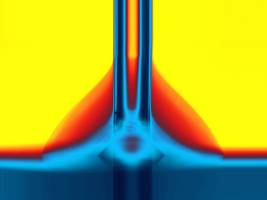
Some surfaces are wetted by water, others are water-repellent. TU Wien (Vienna), KU Leuven and the University of Zürich have discovered a robust surface whose adhesive and wetting properties can be switched using electricity.
Chemistry - Materials Science - 29.06.2016

The direct and efficient conversion of chemically stored energy into electrical energy using fuel cells requires durable, corrosion-resistant and electrochemically highly active materials.
Life Sciences - Chemistry - 01.06.2016
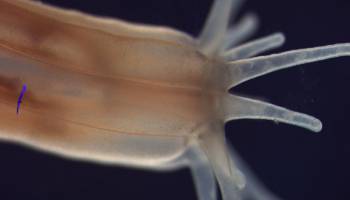
Cells need to "know" where they are in relation to all other cells in order to give rise into the correct cell types and tissues.
Physics - Chemistry - 30.05.2016
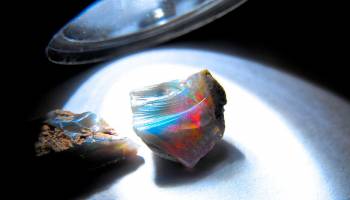
Be it in phyics, mettalurgy, gemology or engineering, the applications of crystals are very broad.
Chemistry - Religions - 12.05.2016
Chemistry - Physics - 05.04.2016
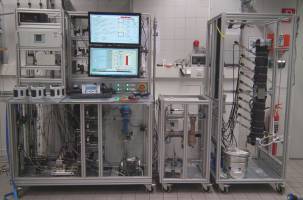
Hydrogen from the natural gas pipeline - a separation technique developed by TU Wien is opening up new possibilities for our natural gas network and improves the ecological balance of hydrogen fuel cells.
Physics - Chemistry - 08.07.2013

A team of quantum physicists in Innsbruck led by Christian Roos and Cornelius Hempel have realised an extremely sensitive method for the spectroscopy of atomic and molecular atoms. This technique can be used to closely study a number of particles. The scientists have published their findings Photonics.
Life Sciences - Chemistry - 31.05.2013
Molecular Switch for Cheaper Biofuel
At the Vienna University of Technology, genetic engineers have found a trick, thanks to which fungi can be used for the production of biofuels far more cost effectively than before.
Life Sciences - Chemistry - 23.05.2013

Signaling cascades communicate and integrate extracellular signaling cues spatially and temporally via formation of defined protein-protein interactions. Scientists from the Institute of Biochemistry in Innsbruck discovered a unique mechanism which is based on binary protein-protein interactions and which explains cross talk between critically regulated signaling cascades.
Physics - Chemistry - 23.01.2013
ERC-Grant for Quantum Physicist Jörg Schmiedmayer
Physics - Chemistry - 15.11.2012
"Solids4Fun -Building Solids for Function"
Chemistry - Life Sciences - 19.03.2012

Innsbruck scientists tested a new chemical modification of RNA molecules successfully for the first time. The results of the close cooperation of two research groups of the Centre for Molecular Biosciences (CMBI) have been published in the journal ACS Chemical Biology and one of their photos has been used as the cover picture of the current issue.
Life Sciences - Chemistry - 21.12.2011

Extracellular cues are recognized by G-protein-coupled receptors which transmit the signal via trimeric G proteins to their cellular effectors. Dr. Eduard Stefan from the Institute of Biochemistry showed in cooperation with international research teams a novel and conserved mechanism how cells adapt to environmental changes.
Astronomy & Space - Chemistry - 28.10.2011
Comet researchers meet at TU Vienna
From October 24-26, 2011, a group of 15 comet researchers from Germany, France, Finland and Austria met at the Institute of Chemical Engineering, TU Vienna.
Chemistry - Life Sciences - 28.07.2011

Remote lakes are subject to the deposition of atmospheric pollutants, mineral dust, and organic matter. In a recent study published in Nature , an international group of limnologists including Prof. Ruben Sommaruga from the Institute of Ecology at the University of Innsbruck have uncovered the effect of dust on the pool of dissolved organic matter of remote alpine lakes.
Chemistry - Physics - 02.05.2011

Chemists from Innsbruck and New York managed to monitor single-molecule switching in action. In an article in "Nature Chemical Biology" they report their findings: The secret of bacterial riboswitches lies in their dynamics. These findings are also relevant in antibiotics research. Photo: Ronald Micura and Andrea Haller from the Institute for Organic Chemistry and the Center for Molecular Biosciences (CMBI) of the University of Innsbruck.
Physics - Chemistry - 05.04.2011
Atom and its Quantum Mirror Image
Standing in front of a mirror, we can easily tell apart ourselves from our mirror image. The mirror does not affect our motion in any way.
Physics - Chemistry - 24.02.2011

Experimental physicists have put a lot of effort in isolating sensitive measurements from the disruptive influences of the environment. In an international first, Innsbruck quantum physicists have realized a toolbox of elementary building blocks for an open-system quantum simulator, where a controlled coupling to an environment is used in a beneficial way.
Chemistry - Physics - 11.01.2011

A team of chemists headed by Thomas Loerting from the University of Innsbruck and Hinrich Grothe from the Vienna University of Technology (TU Wien) have prepared and isolated gas-phase carbonic acid and have succeeded in characterizing the gas-phase molecules by using infrared spectroscopy.
Life Sciences - Chemistry - 02.11.2010

To find the causes for cancer, biochemists and developmental biologists at the University of Innsbruck retraced the function of an important human cancer gene 600 million years back in time. For the first time, they have identified the oncogene myc in a fresh water polyp and they have shown that this oncogene has similar biochemical functions in ancestral metazoan and in humans.
Physics - Chemistry - 23.03.2010
Silicon Valley in the Vienna Prater
Researchers at Vienna University of Technology's Institute of Atomic and Subatomic Physics are really happy about the accreditation of their X-ray laboratory, which is the only one of its type in Austria.


Pharmacology - Mar 16
Detail-oriented and data-driven: Pharmaceutical Sciences graduate Elisabeth Schweiberer
Detail-oriented and data-driven: Pharmaceutical Sciences graduate Elisabeth Schweiberer
Health - Mar 13
Matthias Farlik-Födinger receives Paul Langerhans Prize from the Dermatological Research Working Group
Matthias Farlik-Födinger receives Paul Langerhans Prize from the Dermatological Research Working Group