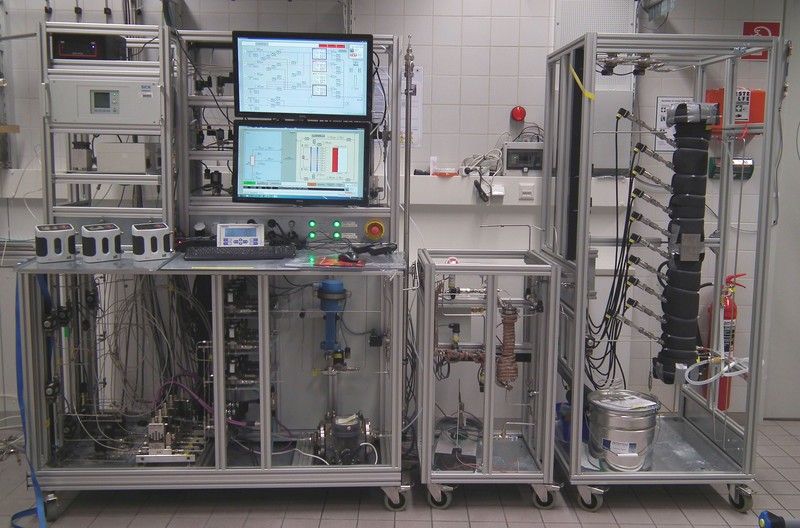
Versuchsanlage HylyPure an der TU Wien
Hydrogen from the natural gas pipeline - a separation technique developed by TU Wien is opening up new possibilities for our natural gas network and improves the ecological balance of hydrogen fuel cells. Our natural gas network is taking on an additional role. In future it will transport hydrogen as well as natural gas. Hydrogen can be mixed with conventional natural gas and filtered out again using a process developed at TU Wien, retaining a purity of 99.97%, which means it can then be used directly for fuel cells. This technology is now being presented to an audience of industry specialists at the Hannover Messe trade fair. Storing and transporting energy - Hydrogen is a valuable source of energy. It is becoming increasingly important, primarily because it enables excess electrical energy from renewable energy sources to be stored. Electrical energy for households, hospitals or entire communities can then be produced in large fuel cells, smaller fuel cells can be used to power motor vehicles. However, there is not yet a comprehensive network of hydrogen filling stations. "There are two options available: either directly source the hydrogen locally by means of electrolysis or have it delivered, e.g. in large pressurised tanks," explains Michael Harasek. Decentralised electrolysis is very expensive, not particularly efficient and it requires powerful electric connecting cables. Transporting hydrogen in tankers is equally time-consuming and costly. But what if we could transport hydrogen using a system that already has ample capacity and is in top working condition?
TO READ THIS ARTICLE, CREATE YOUR ACCOUNT
And extend your reading, free of charge and with no commitment.