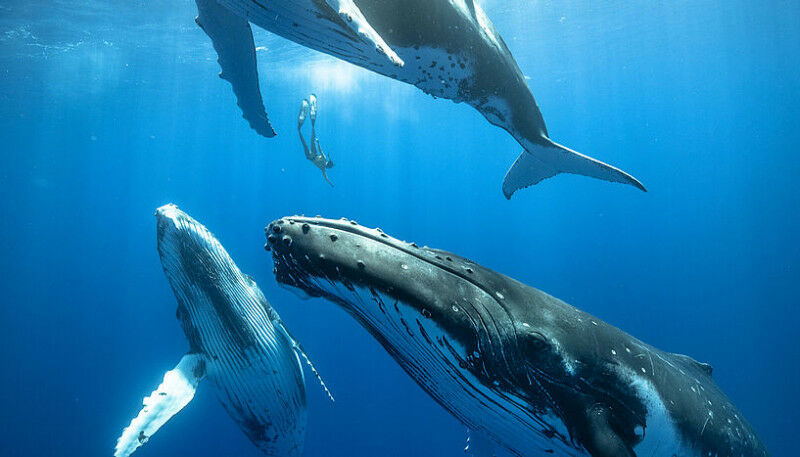
Fig. 1: Freediver descends between 3 juvenile humpback whales the size of buses. C: Karim Iliya
Fig. Freediver descends between 3 juvenile humpback whales the size of buses. C: Karim Iliya The new results also make it clear that human noise in the oceans severely restricts the animals The iconic baleen whales, such as the blue, gray and humpback whale, depend on sound for communication in the vast marine environment where they live. However, ever since whale song were first discovered more than 50 years ago, it remained unknown how baleen whales produce their complex vocalizations - until now. A team led by the voice scientists Coen Elemans from the University of Southern Denmark and Tecumseh Fitch from the University of Vienna has now for the first time found that baleen whales evolved novel structures in their larynx to make their vast array of underwater songs. The study was published in the prestigious journal Nature . Baleen whales are the largest animals to have ever roamed our planet and as top predators play a vital role in marine ecosystems.
UM DIESEN ARTIKEL ZU LESEN, ERSTELLEN SIE IHR KONTO
Und verlängern Sie Ihre Lektüre, kostenlos und unverbindlich.