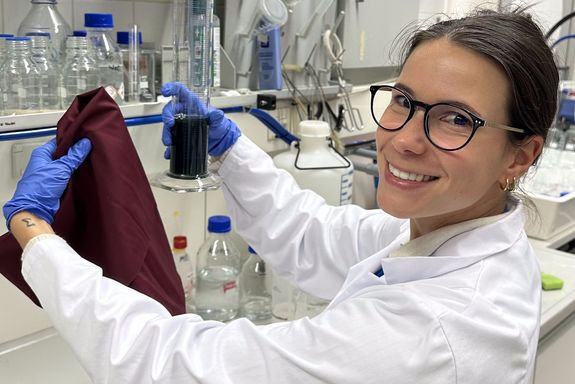
We are producing more textiles than ever before: worldwide, well over one hundred million tons of textiles are manufactured every year - more than twice as much as in the year 2000. This makes it increasingly important not to simply throw away old textiles, but to recover them in an environmentally friendly way.
Five minutes is all’it takes
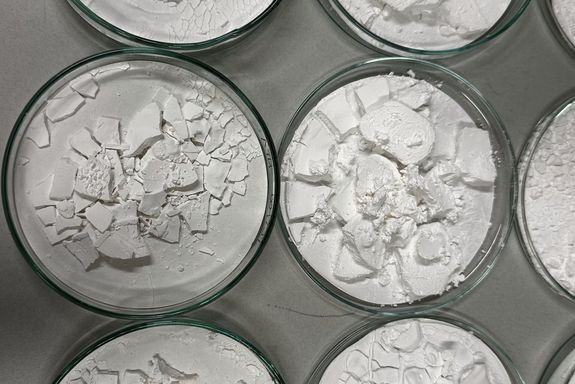
"What may be surprising at first: both menthol and benzoic acid are solid at room temperature. But together they form a liquid - a so-called deep eutectic solvent. This novel liquid is a powerful, non-toxic and easy-to-produce solvent with a wide range of possible applications," explains Andreas Bartl from the Institute of Chemical, Environmental and Bioscience Engineering.When this new solvent is heated to 216 °C, a fascinating process begins: within just five minutes, the components of the mixed textiles separate from each other. The polyester dissolves completely, while the cotton remains unchanged. It can then be washed, dried and reused, and the polyester portion precipitates upon cooling, is separated, and can also be recycled. With recovery rates of 100% for cotton and 97% for polyester, the process achieves an almost complete recycling - a result that conventional methods have not been able to reach so far.
Separating, not breaking down
"The truly remarkable thing about this new process is that neither the cotton nor the polyester is damaged or chemically altered," says Andreas Bartl. "Our analyses show that the cotton fibres remain stable and retain their typical properties - they can even be spun into new yarns again. And the polyester also remains unchanged: its structure and melting temperature are the same as before. This demonstrates how gentle and efficient this recycling process is."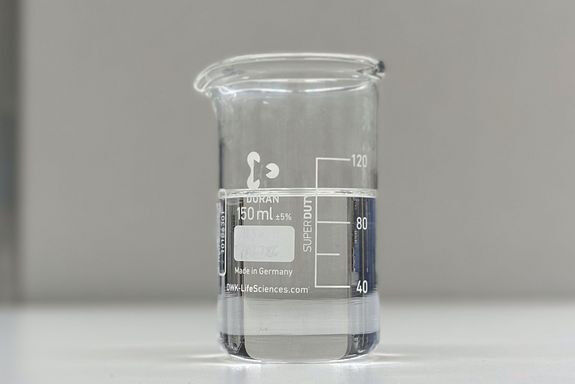
A promising approach
So far, the process has only been tested in the laboratory, but the research team led by Nika Depope and Andreas Bartl sees great industrial potential in it. Both the recovered cotton and the recycled polyester can be used for a wide range of applications - for example for new yarns, fibres, nonwovens or technical textiles.The team is currently working on making the process even more energy-efficient, since the required temperature of 216 °C is a drawback in terms of energy consumption. However, the researchers are confident that further optimisations are possible - and that the method could in future be used on an industrial scale.