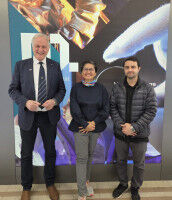
Heading the lead project: Christian Slugovc, Paolo Falcaro and Egbert Zojer.
By Doris Griesser Although microporous crystals are tiny, their potential is enormous. To exploit this, TU Graz has initiated the interdisciplinary lead project Porous Materials@Work. Our life occurs in voids; for example, rooms in buildings are nothing but voids and these rooms and the furniture in them consist of materials full of voids. Porous materials are omnipresent - both in nature and in technology. Even the bodies of our cars become increasingly porous - in this case to reduce weight and to save fuel. Voids are extremely powerful, determining and changing the character of substances. Making a material porous by inflating it with air can change it into a detergent, trapping dirt in its voids.
TO READ THIS ARTICLE, CREATE YOUR ACCOUNT
And extend your reading, free of charge and with no commitment.
Your Benefits
- Access to all content
- Receive newsmails for news and jobs
- Post ads