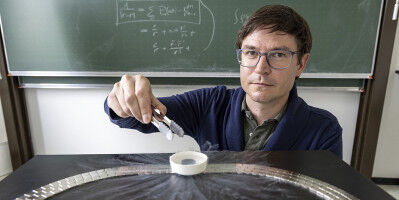
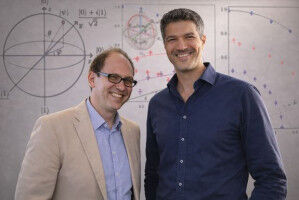
 Jorryt Matthee, Assistant at ISTA.
Jorryt Matthee, Assistant at ISTA. Peter Rigaud/ISTA The James Webb Space Telescope makes one of the most unexpected findings within its first year of service: A high number of faint little red dots in the distant Universe could change the way we understand the genesis of supermassive black holes. The research, led by Jorryt Matthee, Assistant Professor in astrophysics at the Institute of Science and Technology Austria (ISTA), is now published in The Astrophysical Journal . A bunch of little red dots found in a tiny region of our night sky might be an unexpected breakthrough for the James Webb Space Telescope (JWST) within its first year of service. These objects were indistinguishable from normal galaxies through the 'eyes' of the older Hubble Space Telescope. "Without having been developed for this specific purpose, the JWST helped us determine that faint little red dots-found very far away in the Universe's distant past-are small versions of extremely massive black holes. These special objects could change the way we think about the genesis of black holes," says Jorryt Matthee, Assistant Professor at the Institute of Science and Technology Austria (ISTA) , and lead author of the study.
TO READ THIS ARTICLE, CREATE YOUR ACCOUNT
And extend your reading, free of charge and with no commitment.
Your Benefits
- Access to all content
- Receive newsmails for news and jobs
- Post ads