





news
Medical University of Vienna
Results 21 - 40 of 381.
Health - Pharmacology - 07.11.2025
AI models can accurately predict severe liver complications
Researchers at MedUni Vienna have tested the prognostic significance of their previously developed artificial intelligence (AI) model based on simple blood tests. The Vienna 3P/5P models, which are using just three or five routine laboratory parameters, can predict the clinical course of patients with advanced chronic liver disease - without invasive procedures or the need for special equipment.
Health - Life Sciences - 31.10.2025

Despite enormous progress in the past two decades, the intentional control of bionic prostheses remains a challenge and the subject of intensive research. Now, scientists at the Medical University of Vienna and Imperial College London have developed a new method for precisely detecting the nerve signals remaining after an arm amputation and utilising them to control an artificial arm.
Health - Pharmacology - 30.10.2025
New Cancer Drug Shows Exceptional Tumor-Fighting Potential
A research team led by the Medical University of Vienna, the HUN-REN Research Centre for Natural Sciences and the Eötvös Loránd University in Budapest has developed a groundbreaking new chemotherapeutic agent, LiPyDau, which shows remarkable efficacy against multiple tumor types in preclinical studies.
Health - Pharmacology - 28.10.2025
New therapy for active brain metastases successfully tested
An international clinical study led by the Medical University of Vienna shows that the drug patritumab deruxtecan (HER3-DXd) can have a promising effect in patients with active brain metastases of various tumour types. Patients with advanced disease benefited from treatment in both non-small cell lung cancer (NSCLC) and metastatic breast cancer, as shown in two simultaneous publications in The Lancet Oncology.
Life Sciences - Health - 22.10.2025
New insights into rare type of brain tumour in children
Researchers at the Medical University of Vienna and the Dana-Farber Cancer Institute in Boston have deciphered the cellular and molecular mechanisms of a very rare and particularly aggressive type of cancer in children: embryonic tumour with multilayered rosettes (ETMR). The study results, published in the journal Nature Cancer, open up new perspectives for targeted treatment strategies.
Health - Pharmacology - 21.10.2025
New approach to prostate cancer treatment
An international research team led by the Medical University of Vienna has demonstrated for the first time that thyroid hormone plays a key role in the development and progression of prostate cancer. By blocking a specific thyroid hormone receptor, cancer growth was inhibited in both animal models and tumour cell cultures.
Health - Life Sciences - 20.10.2025
Previously unknown mechanism in pre-eclampsia discovered
Pre-eclampsia is one of the most serious complications in pregnancy, affecting millions of women and newborns worldwide and potentially life-threatening. Despite intensive research, it has remained unclear what processes in the placenta lead to the disease. Now, a research team led by the Medical University of Vienna has discovered a previously unknown mechanism that plays a decisive role in the development of pre-eclampsia.
Health - Life Sciences - 17.10.2025
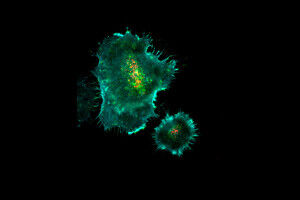
When immune cells strike, precision is everything. New research reveals how natural killer and T cells orchestrate the release of toxic granules - microscopic packages that destroy virus-infected or cancerous cells. The study led by researchers from CeMM, St. Anna CCRI, MedUni Vienna, Med Uni Graz, the University Hospital Bonn (UKB) and the University of Bonn, published in Science Immunology, uncovers an unexpected link between lipid metabolism and the immune system's ability to deliver its lethal cargo, offering new insights into diseases caused by genetic defects.
Life Sciences - Health - 16.10.2025

A research team from the Medical University of Vienna and the Medical University of Graz has discovered a previously unknown genetic cause of hereditary optic atrophy, a degenerative disease of the optic nerve associated with gradual loss of vision. The results, currently published in the journal Genetics in Medicine, open up new possibilities for the genetic diagnosis of this disease and provide important approaches for future research into the underlying disease mechanisms.
Health - 15.10.2025

Researchers at the Medical University of Vienna have taken a closer look at a previously largely unknown component of the immune system: the protein molecule TRAT1 (T Cell Receptor Associated Transmembrane Adaptor 1) plays a central role in how so-called T helper cells (a specialised subgroup of immune cells) distinguish between attack and self-control - an important mechanism for restraining inflammation and preventing autoimmune diseases.
Health - 13.10.2025

In a world first, a novel diaphragmatic valve was used to treat benign pleural effusions in two patients at the Department of Thoracic Surgery at MedUni Vienna and University Hospital Vienna. This represents an important step forward in the treatment of this common and debilitating condition, which can improve patients' quality of life with just a single procedure.
Health - Pharmacology - 08.10.2025
Medication-based obesity treatment: altered taste perception could influence appetite regulation
A recent study led by the Center for Public Health at the Medical University of Vienna shows that in people who are obese or overweight and are treated with so-called incretin-based drugs, changes in taste perception may be linked to differences in appetite regulation. The study, published in the journal Diabetes, Obesity and Metabolism, thus provides important evidence that sensory changes could be an additional factor in the effect of these therapies.
Health - Life Sciences - 01.10.2025
Potential biomarker for the development of long COVID identified
A research team working at MedUni Vienna has demonstrated that a specific component of the immune system (PTX-3) remains at significantly higher levels in the blood of patients who have suffered from severe COVID-19, even months after the acute infection has subsided. This study identified PTX-3 as a potential biomarker for existing tissue damage, long-term immune activation and also for complications following COVID-19.
Pharmacology - Health - 29.09.2025
Clear efficacy of drug in adult patients with spinal muscular atrophy
An Austria-wide research team coordinated by MedUni Vienna has demonstrated for the first time in a large observational study that the drug risdiplam leads to a significant improvement in motor function in adult patients with 5q-associated spinal muscular atrophy (SMA). The results close an important evidence gap, as previous approval studies had mainly examined children.
Health - Pharmacology - 17.09.2025
Better therapy selection for childhood leukaemia
Despite decades of optimisation of therapy protocols, the prognosis for acute myeloid leukaemia in children (paediatric AML) remains poor for many patients. A research team from St. Anna Children's Cancer Research, the CeMM Research Centre for Molecular Medicine of the Austrian Academy of Sciences, the Medical University of Vienna and St. Anna Children's Hospital has now succeeded in developing a method for the early detection of resistance mechanisms in paediatric AML with the aid of state-of-the-art imaging, molecular methods and computer-assisted data analysis.
Health - 12.09.2025
Early detection of pulmonary complications in myositis: New imaging method shows promising results
In a multidisciplinary collaboration, a research team from the Medical University of Vienna and Univdersity Hospital Vienna has demonstrated that a novel imaging technique could predict the progression of severe pulmonary complications in patients with rare autoimmune muscle diseases at an early stage.
Life Sciences - Health - 10.09.2025
Cholesterol shapes how the brain’s chemical transporters work
A research team led by Harald Sitte from the Medical University of Vienna has shown that cholesterol in the membrane of brain cells fine-tunes the chemical transporters for serotonin, dopamine and noradrenaline, thereby influencing the recycling of neurotransmitters and the response to medication. These findings, recently published in the journal Molecular Psychiatry, provide new new approaches for research into mental illnesses such as depression, addiction and ADHD.
Health - Pharmacology - 03.09.2025
Reliably predicting the risk of gestational diabetes
An international research team involving MedUni Vienna has shown that an oral glucose tolerance test (OGTT) in early pregnancy provides crucial information about the risk of gestational diabetes. The study, currently published in the journal Diabetologia, proves that blood sugar levels from an early OGTT can predict not only the later development of gestational diabetes, but also the need for insulin therapy - and thus a more severe course of the disease.
Health - 02.09.2025
Molecular chip reliably identifies allergic asthma
A simple blood test could pave the way for personalised asthma therapy. Researchers at Karl Landsteiner University of Health Sciences (KL Krems) and the Medical University of Vienna (MedUni Vienna) have developed a molecular allergy chip that reliably identifies allergic asthma. When used on participants in the LEAD study, it was found that over 70 per cent of people with asthma were sensitised to certain inhaled allergens.
Life Sciences - Health - 28.08.2025
New method for precise detection of nanoplastics in the body
With a diameter of less than 0.001 millimetres, nanoplastic particles can penetrate body tissue and accumulate in organs. Because it is still difficult to detect them precisely in the body, research into the health effects of microplastics and nanoplastics (MNP) remains challenging. Now, a research team led by MedUni Vienna, the University of Hamburg and ETH Zurich has developed a method that can reliably track the path of these tiny particles from oral ingestion down to the cellular level.


