





news
Environment
Results 181 - 200 of 206.
Environment - Life Sciences - 26.02.2018
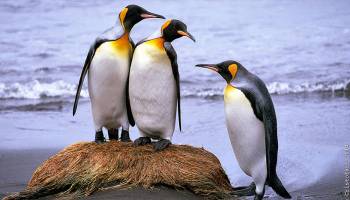
More than 70 percent of the global King penguin population, currently forming colonies in Crozet, Kerguelen and Marion sub-Antarctic islands, may be nothing more than a memory in a matter of decades, as global warming will soon force the birds to move south, or disappear. This is the conclusion of a study published in the current issue of the prestigious and performed by an international team of researchers from France, Monaco, Italy, Norway, South Africa, Austria and US.
Environment - 08.02.2018

By Birgit Baustädter Alexander Bergmann and his team at TU Graz's Institute of Electronic Sensor Systems have made it their aim to improve our quality of air and life by means of sophisticated sensor systems. It's a radiantly beautiful day as Alexander Bergmann talks about his research area in his Graz Inffeldgasse office, which is bathed in light.
Environment - 22.01.2018

Emissions of volatile organic compounds higher than previously assumed In the scientific journal PNAS, researchers from Innsbruck, Austria, present the world's first chemical fingerprint of urban emission sources of volatile organic compounds (VOCs). Accordingly, the abatement strategy for organic solvents is having an effect in Europe.
Life Sciences - Environment - 18.09.2017

Pearl millet genome sequence provides a resource to improve agronomic traits in extreme environments An international consortium under the lead of the non-profit organization "International Crops Res
Environment - Chemistry - 14.07.2017

By Ulrike Keller Nikolaus Schwaiger co-developed the BioCRACK process. High-grade and eco-friendly diesel fuel is produced from biomass such as wooden waste, straw and reeds. The findings are impressive. "In comparison with fossil fuels, the fuel generated in the bioCRACK plant saves 85 per cent of greenhouse gases," explains chemical engineer Nikolaus Schwaiger.
Environment - Chemistry - 21.06.2017

Without fossil fuels, there can be no blast furnace process - but hydrogen could play a more important role in the future. An environmentally friendly process is being developed at TU Wien by which biomass can be used to produce a hydrogen-rich gas that can then be employed in various ways in the iron and steel industry.
Environment - Innovation - 10.05.2017

How can we burn natural gas without releasing CO2 into the air? This feat is achieved using a special combustion method that TU Wien has been researching for years: chemical looping combustion (CLC). In this process, CO2 can be isolated during combustion without having to use any additional energy, which means it can then go on to be stored.
Environment - Administration - 04.05.2017

Under the leadership of the Environmental Sciences Research Network of the University of Vienna, the key national actors in long-term ecological research (LTER) join forces to establish a new infrastructure for the collection of environmental data. Funded by the Austrian Research Promotion Agency (FFG), the project aims to collect data on the effects of extreme climatic events on the carbon, water and nitrogen cycle in ecosystems by establishing six cutting-edge measurement sites.
Mathematics - Environment - 23.08.2016

Mathematical models analysing the interplay between society and hydrological effects have been developed at TU Wien (Vienna).
Environment - 01.08.2016

Grey on the outside, green inside: The production of "Öko²-Beton" concrete consumes up to 30 percent less CO2 than the production of standard concrete, and yet the "green" concrete is by no means less stable or less convenient to process. Photographic material available for download at the end of the text.
Life Sciences - Environment - 17.05.2016

Scientists from Austria, Finland and Hungary are using laser scanners to study the day-night rhythm of trees. As it turns out, trees go to sleep too. Most living organisms adapt their behavior to the rhythm of day and night. Plants are no exception: flowers open in the morning, some tree leaves close during the night.
Earth Sciences - Environment - 24.03.2016

Researchers at TU Graz's Institute of Applied Geosciences reveal findings on climate change, renewable energy and geological processes on the Erzberg mountain by "questioning" special witnesses. How will the climate change in the future? Questions about the future global climate can be better answered when we know more regional details about climate in the past.
Environment - Innovation - 14.01.2016

Traditional concrete is usually grey and is used in the construction of walls, bridges and roads. Right? Almost. Concrete is much more. Concrete is the most commonly used building material in the world and has to conform to demands in terms of workability, strength and durability, depending on area of application.
Environment - Earth Sciences - 18.08.2014

By combining climate and glacier models, scientists headed by Ben Marzeion from the University of Innsbruck have found unambiguous evidence for anthropogenic glacier mass loss in recent decades. In a paper published in Science, the researchers report that about one quarter of the global glacier mass loss during the period of 1851 to 2010 is attributable to anthropogenic causes.
Life Sciences - Environment - 14.07.2014
Flower development in 3D: Timing is the key
Developmental processes in all living organisms are controlled by genes. At the same time there is a continuous metabolism taking place. Wolfram Weckwerth, head of the Department of Ecogenomics and Systems Biology at University of Vienna, and his team have analyzed this interaction between metabolism and developmental processes in flowering plants (angiosperms).
Environment - Physics - 04.07.2014
Austria’s new green super computer
Several universities have come together to construct Austria's most powerful mainframe computer. Phase VSC-3 (Vienna Scientific Cluster 3) offers not only impressive computing power, but also serious energy efficiency. Austria's scientific community has a new super computer. Comprising more than 32,000 individual processor cores, the VSC-3 cluster is now being put into operation in the Science Center at Vienna University of Technology (TU Wien).
Innovation - Environment - 24.06.2014
Sweet Sweet Straw
The calorie free sweetener erythritol is widely used in Asia; it is also gaining popularity in Europe and America.
Life Sciences - Environment - 18.03.2014
Sea anemone is genetically half animal, half plant
Sea anemone shows a genomic landscape surprisingly similar to human genome, but also displays regulatory mechanisms similar to plants The team led by evolutionary and developmental biologist Ulrich Technau at the University of Vienna discovered that sea anemones display a genomic landscape with a complexity of regulatory elements similar to that of fruit flies or other animal model systems.
Economics - Environment - 06.02.2014

As an international team of researchers including Benjamin Marzeion from the Universitiy of Innsbruck reports, climate change and sea-level rise may cause trillions in damage to world's coasts. Coastal regions have to adapt to sea-level rise soon. Prompt action is needed most in Asia and Africa. Coastal regions may face massive increases in damages from storm surge flooding over the course of the 21st century.
Earth Sciences - Environment - 18.11.2013

An international team of researchers led by Ralf Tappert, University of Innsbruck, reconstructed the composition of the Earth's atmosphere of the last 220 million years by analyzing modern and fossil plant resins. The results suggest that atmospheric oxygen was considerably lower in the Earth's geological past than previously assumed.


