





news
Institute of Science and Technology Austria (ISTA)
Results 1 - 20 of 57.
Materials Science - Physics - 18.03.2026
ISTA scientists explain static electricity in the most abundant solid insulators Two microscopic grains collide and produce a tiny spark. This phenomenon may have provided the energy to kick off life on Earth. But if these solid particles have the same composition, what factor causes the charge to flow in a given direction? In a new study published in Nature , physicists from the Institute of Science and Technology Austria (ISTA) identify the key factor as environmental carbon-based molecules that adhere to the materials' surface.
Chemistry - Materials Science - 16.02.2026
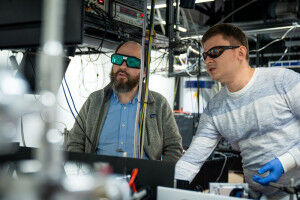
ISTA physicists explain the exceptional energy-harvesting efficiency of perovskites Despite being riddled with impurities and defects, solution-processed lead-halide perovskites are surprisingly efficient at converting solar energy into electricity. Their efficiency is approaching that of silicon-based solar cells, the industry standard.
Physics - Life Sciences - 08.01.2026

Inspired by biological systems, materials scientists have long sought to harness self-assembly to build nanomaterials. The challenge: the process seemed random and notoriously difficult to predict. Now, researchers from the Institute of Science and Technology Austria (ISTA) and Brandeis University have uncovered geometric rules that act as a master control panel for self-assembling particles.
Health - Life Sciences - 02.12.2025
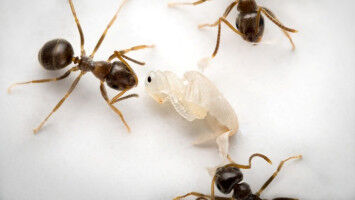
Early disease detection in the colony: Ants signal incurable sickness to save others Ant colonies operate as tightly coordinated "superorganisms" with individual ants working together, much like the cells of a body, to ensure colony health. Researchers at the Institute of Science and Technology Austria (ISTA) have now discovered that terminally ill ant brood, like infected cells in a body, release an odor signaling their impending death and the risk they pose.
Physics - 01.12.2025
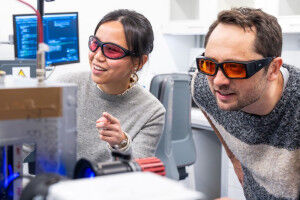
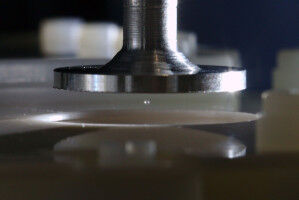
Physicists overcome a fundamental limitation of acoustic levitation with charge Physicists from the Institute of Science and Technology Austria (ISTA) have developed a method to acoustically levitate objects while keeping them physically separated using charge. Their results, published in PNAS , could find applications in materials science, robotics, and microengineering .
Environment - Earth Sciences - 24.11.2025
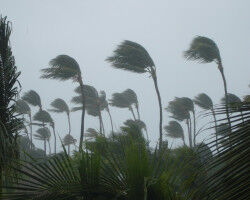
Tropical cyclones can unleash extensive devastation, as recent storms that swept over Jamaica and the Philippines made unmistakably clear. Accurate weather forecasts that buy more time to prepare are crucial for saving lives and are rooted in a deeper understanding of climate systems. Driving this forward, researchers at the Institute of Science and Technology Austria (ISTA) and others have successfully identified a previously unknown cyclic climate pattern by historical reanalysis of datasets and satellite observations.
Physics - 20.11.2025
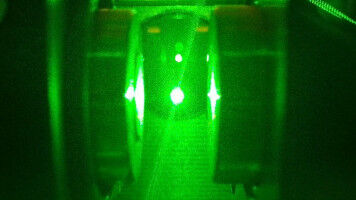
Using lasers as tweezers to understand cloud electrification might sound like science fiction, but at the Institute of Science and Technology Austria (ISTA), it is a reality. By trapping and charging micron-sized particles with lasers, researchers can now observe their charging and discharging dynamics over time.
Physics - 13.11.2025

ISTA scientists solve complex quantum problems with the help of classical physics Quantum many-body scars are challenging our understanding of when and how quantum systems reach equilibrium. After recently demonstrating that they are more common than anticipated, researchers from the Serbyn group at the Institute of Science and Technology Austria (ISTA) have developed an algorithm to find them using classical equations of motion.
Environment - Earth Sciences - 14.10.2025
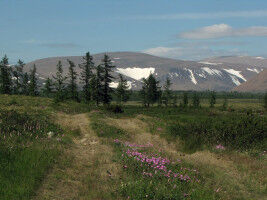
Researchers and the changing Siberian landscape The Arctic tundra is not only a place of untouched nature, but also a hotspot for ecological change. Researchers studying the fragile balance of the tundra are uncovering alarming signs: the disappearance of lichens and the increase in fires mark the start of a chain reaction with potential global consequences.
Environment - Innovation - 13.10.2025
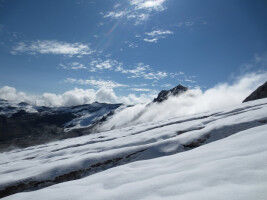
ISTA study confirms: Glaciers are fighting a losing battle against climate change Glaciers are fighting back against climate change by cooling the air that touches their surfaces. But for how long? The Pellicciotti group at the Institute of Science and Technology Austria (ISTA) has compiled and re-analyzed an unprecedented dataset of on-glacier observations worldwide.
Chemistry - Life Sciences - 01.10.2025
From cell damage to empty batteries, ISTA chemists put singlet oxygen on a leash Researchers from the Freunberger group at the Institute of Science and Technology Austria (ISTA) have unveiled pivotal insights into the redox chemistry of oxygen and reactive oxygen species (ROS). While some ROS play essential roles in cell signaling, the particularly harmful singlet oxygen damages cells and degrades batteries.
Life Sciences - 22.09.2025
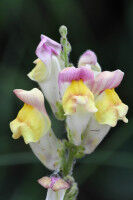
ISTA scientists collect snapdragon flowers in the Pyrenees to trace their ancestry Every season, scientists from the Institute of Science and Technology Austria (ISTA) go on field trips to the Pyrenees. Their mission: gather snapdragon flowers to understand their genetic makeup. In a recently published study in Molecular Ecology, theyshow how nature uses color genes to keep two varieties of snapdragons distinct, even when they share the same habitat.
Environment - Earth Sciences - 02.09.2025

When the Soviet Union's collapse means no glacier data for decades in Tajikistan Too little snowfall is now also shaking the foundations of some of the world's most resilient 'water towers', a new study led by the Pellicciotti group at the Institute of Science and Technology Austria (ISTA) shows. After establishing a monitoring network on a new benchmark glacier in central Tajikistan, the international team of researchers was able to model the entire catchment's behavior from 1999 to 2023.
Health - Life Sciences - 21.07.2025

Immune cells turn into 'Mini-Hulks' to push away tissue and make space when migrating Immune responses rely on the efficient movement of immune cells within the complex and geometrically unpredictable three-dimensional tissues that make up our bodies. Recent research by the Sixt group at the Institute of Science and Technology Austria (ISTA) unveils how immune cells use their cytoskeleton to exert forces on their surrounding environment to push their way through tissues.
Physics - Mathematics - 12.06.2025

ISTA scientists formalize how amorphous solids learn nontrivial behaviors Can we understand and predict how complex systems learn? Modeling learning in a theoretical framework in disordered solids, researchers at the Institute of Science and Technology Austria (ISTA) make surprising findings reminiscent of a Star Trek philosophy.
Physics - Computer Science - 21.05.2025

Quantum processors: Influencing the trace of 'missing electrons' in spin qubits Amid the race to develop and market practical quantum computers, researchers from the Katsaros group at ISTA pay particular attention to the intriguing physics of special qubits generated in the semiconductor germanium. By harnessing the response of these so-called "hole spin qubits" to magnetic and electric fields, they answer fundamental questions about the physics that could help advance quantum processors.
Astronomy & Space - Environment - 19.05.2025

Roots 'feel' gravity to extend and anchor themselves in the soil, but they can alter their growth direction toward a water source when needed. However, according to a new study by scientists at the Institute of Science and Technology Austria (ISTA) and Northwest A&F University in China, this change is promoted by drought conditions, which suppress the roots' gravity-sensing ability.
Life Sciences - Physics - 07.05.2025

ISTA scientists present new microscopy method to reconstruct mammalian brain tissue Our brain is a complex organ. Billions of nerve cells are wired in an intricate network, constantly processing signals, enabling us to recall memories or to move our bodies. Making sense of this complicated network requires a precise look into how these nerve cells are arranged and connected.
Physics - Chemistry - 23.04.2025

Bizarre quantum phenomenon more common than anticipated, ISTA physicists show A surprising quantum phenomenon that goes against the universe's drive for increased chaos might not be all too exotic after all. So far, quantum many-body scars were thought to exist only under specific experimental conditions.
Life Sciences - Health - 10.04.2025

Multiple antibiotic resistance is auxiliary to bacterial fitness and adaptability Could a gene regulatory network in gut microbes have evolved its elaborate and tightly regulated molecular machinery only to pump out antibiotics indiscriminately? Researchers from the Institute of Science and Technology Austria (ISTA) show this is an auxiliary function.


