







news
Innovation
Results 101 - 108 of 108.
Physics - Innovation - 05.11.2012
Electron Microscopes With a Twist
Vortex beams, rotating like a tornado, offer completely new possibilities for electron microscopy. A method of producing extremely intense vortex beams has been discovered at the Vienna University of Technology (TU Vienna). Nowadays, electron microscopes are an essential tool, especially in the field of materials science.
Physics - Innovation - 08.06.2012
Bright X-Ray Flashes Created in Laser Lab
A breakthrough in laser science was achieved in Vienna: In the labs of the Photonics Institute at the Vienna University of Technology, a new method of producing bright laser pulses at x-ray energies was developed. The radiation covers a broad energy spectrum and can therefore be used for a wide range of applications, from materials science to medicine.
Physics - Innovation - 12.03.2012
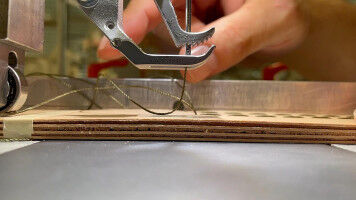
3D-Printer with Nano-Precision
Printing three dimensional objects with incredibly fine details is now possible using "two-photon lithography". With this technology, tiny structures on a nanometer scale can be fabricated. Researchers at the Vienna University of Technology (TU Vienna) have now made a major breakthrough in speeding up this printing technique: The high-precision-3D-printer at TU Vienna is orders of magnitude faster than similar devices (see video).
Innovation - Chemistry - 17.05.2011
The World’s Smallest 3D Printer
[ Florian Aigner A research project at the Vienna University of Technology (TU Vienna) could turn futuristic 3D-printers into affordable everyday items. Printers which can produce three-dimensional objects have been available for years. However, at the Vienna University of Technology, a printing device has now been developed, which is much smaller, lighter and cheaper than ordinary 3D-printers.
Physics - Innovation - 30.03.2011
Physicists rotate beams of light
Controlling the rotation of light - this amazing feat was accomplished at the Vienna University of Technology (TU Vienna), by means of a ultra thin semiconductor. This can be used to create a transistor that works with light instead of electrical current. Light waves can oscillate in different directions - much like a string that can vibrate up and down or left and right - depending on the direction in which it is picked.
Physics - Innovation - 23.08.2010
High-precision experiments to determine the future of the world’s energy
One of the world's most accurate scales is currently being used for fusion research at the Institute of Applied Physics at the Vienna University of Technology (VUT). A clean, eco-friendly and virtually inexhaustible source of energy: using nuclear fusion to produce electricity has been the dream of countless scientists for many years.
Environment - Innovation - 19.07.2010
Research for the world’s climate
Vienna (TU). Preventing global warming, obtaining energy from renewable sources in an environmentally friendly way - these tasks rank amongst the most important challenges facing us in the twenty-first century. In light of the importance of this topic, the Vienna University of Technology has declared the field of energy and environment to be one of its key areas of research.
Innovation - Environment - 11.02.2010
Climate: A framework for future research and assessment (pp 747-756)
The paper entitled 'The Next Generation of Scenarios for Climate Change Research and Assessment' has been featured in this week's press release for Nature. A new generation of plausible future climate pathways is needed to improve understanding of potential climate and socio-economic outcomes, suggests a Perspectives article in Nature.


