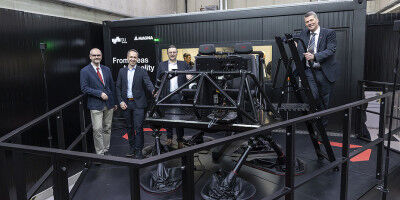
Martin Hofstetter measuring the electric research vehicle: scant installation space for the electric drive.
How do hybrid vehicles become more powerful and at the same time cheaper? TU Graz's Martin Hofstetter is developing software which delivers practical answers. The EU's climate targets aim high and don't let up for passenger vehicles. In 2020 new cars will only be allowed to emit on average 95 grams of CO2 per kilometre; in 2015 the CO2 emission of a new car was about 120 grams. These drastic reduction measures are justified by the fact that passenger vehicles presently count among the main CO2 polluters. The current most promising approach to CO2 reduction lies in the electrification of the drive train, either in the form of purely electrically powered vehicles or in hybrid vehicles, which are propelled by a combination of combustion engine and electric motor. Vehicle manufacturers have two possibilities: either to develop completely new vehicles or to adapt existing models. In the design of the electric drive, various demands on performance, energy efficiency, space and costs - which influence each other in a complex way - have to be taken into account.
TO READ THIS ARTICLE, CREATE YOUR ACCOUNT
And extend your reading, free of charge and with no commitment.