







news
Life Sciences
Results 361 - 380 of 456.
Life Sciences - Environment - 28.08.2018

The effects of island remoteness from the mainland on the number of species found on islands differs strongly for non-native compared to native species. Numbers of native species on islands decrease with greater remoteness, while numbers of non-native species increase. This surprising finding has been uncovered by an international research team led by Dietmar Moser, Bernd Lenzner and Franz Essl from the Department of Botany and Biodiversity Research of the University of Vienna.
Health - Life Sciences - 13.08.2018

In order to better understand important biological membranes, it is necessary to explore new methods. Researchers at TU Wien (Vienna) have succeeded in creating an artificial placental barrier on a chip, using a high-resolution 3D printing process. The placenta has an essential and highly complex task: it must ensure the exchange of important substances between the mother and her unborn child, whilst simultaneously blocking other substances from passing through.
Life Sciences - Environment - 08.08.2018

By Christian Sturmbauer und Konstantinos Tzivanopoulos University of Graz, Graz University of Technology together with an international research team discover new mechanisms of speciation Animals that migrated or have been introduced in Central Europe - such as the Asian bush mosquito or the Asian ladybeetle - feel extremely comfortable in their new homes due to changing climatic conditions.
Chemistry - Life Sciences - 01.07.2018

Microbioreactors with integrated sensors enable improved and well-controlled reaction conditions to be produced and are increasingly used in biocatalysis, process optimisation, diagnosis and cell culturing. Microbioreactors are miniaturised bioreactors with structures on the micrometre scale. They are a special field of microfluidics or lab-on-chip technology and consist of chambers and channels in sizes from 10 um to 3 mm and depths from 10 to 800 um.
Life Sciences - Environment - 19.06.2018

What stops a species adapting to an ever-wider range of conditions, continuously expanding its geographic range? The biomathematician Jitka Polechová, an Elise Richter Fellow at the University of Vienna, has published a paper in PLoS Biology which explains the formation of species' range margins. The theory shows that just two compound parameters, important for both ecology and evolution of species, are fundamental to the stability of their range: the environmental heterogeneity and the size of the local population.
Social Sciences - Life Sciences - 15.06.2018

When are primary school children willing to share valuable resources with others and when are they not? A team of researchers from the University of Vienna lead by cognitive biologist Lisa Horn investigated this question in a controlled behavioural experiment. The motivation to share seems to be influenced by group dynamical and physiological factors, whereas friendship between the children seems to be largely irrelevant.
Chemistry - Life Sciences - 11.06.2018

TU Graz researchers managed for the first time ever to 'retrain' an enzyme to build ring-shaped molecular structures instead of performing its natural task of reducing double bonds. The work was published in Angewandte Chemie, and is relevant for the production of pharmaceuticals and plant protection products.
Life Sciences - Chemistry - 22.05.2018

During embryonic development genetic cascades control gene activity and cell differentiation. In a new publication of the journal PNAS, the team of Ulrich Technau of the Department of Molecular Evolution and Development at the University of Vienna reported that besides the genetic program, also mechanical cues can contribute to the regulation of gene expression during development.
Health - Life Sciences - 17.04.2018

What happens when T cells detect suspicious activity in the body? Researchers from the TU Wien and the Medical University of Vienna have revealed that immune receptors of T cells operate in unsuspected ways. Every T cell receptor of the living T cell (left) is marked with a special marker molecule. The bottom part of the cell can be imaged with a highly sensitive microscope.
Environment - Life Sciences - 26.02.2018
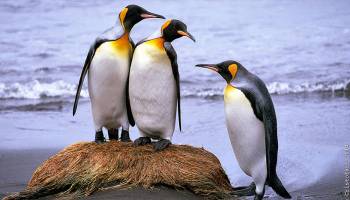
More than 70 percent of the global King penguin population, currently forming colonies in Crozet, Kerguelen and Marion sub-Antarctic islands, may be nothing more than a memory in a matter of decades, as global warming will soon force the birds to move south, or disappear. This is the conclusion of a study published in the current issue of the prestigious and performed by an international team of researchers from France, Monaco, Italy, Norway, South Africa, Austria and US.
Life Sciences - Health - 22.02.2018

Writing in Water Research, researchers from TU Graz and the University of Graz discuss new materials that prevent damage from microbial induced concrete corrosion. More pictures available at the end of the text Wastewater systems are integral to infrastructure in every community. In an ideal world, they operate smoothly and are long-lasting.
Physics - Life Sciences - 11.12.2017

Sexualized representations, especially the emphasis of secondary sexual characteristics, can change the way we perceive an individual. An international team of researchers led by Giorgia Silani from the Faculty of Psychology at the University of Vienna has shown that empathic feelings and brain responses are reduced when we observe the emotions of sexualized women.
Health - Life Sciences - 16.11.2017
Veni Vidi Vici
Multidrug resistance of microbes poses a serious global threat to human health. Such resistant strains of Klebsiella pneumoniae significantly reduce therapeutic options for the treatment of Klebsiella-induced, potentially fatal pneumonia or sepsis.
Life Sciences - 08.11.2017

The Goffin's cockatoo is not a specialised tool user in the wild but has shown the capacity to invent and use different types of tools in captivity. Now cognitive biologists from the University of Vienna and the University of Veterinary Medicine Vienna tested these parrots in a tool use task, requiring the birds to move objects in relation to a surface.
Health - Life Sciences - 23.10.2017

Illnesses such as cancer and multiple sclerosis may also be associated with lipids. Disorders are difficult to assess due to the diversity of lipids. Graz scientists present a new tool for the analysis of lipids in Nature Methods. No lipids, no life. In all organisms, lipids form cell walls, store energy and release it when necessary, and play an important role in cell signalling.
Astronomy & Space - Life Sciences - 17.10.2017

Scientists around Tetyana Milojevic from the Faculty of Chemistry at the University of Vienna are in search of unique biosignatures, which are left on synthetic extraterrestrial minerals by microbial activity. The biochemist and astrobiologist investigates these signatures at her own miniaturized "Mars farm" where she can observe interactions between the archaeon Metallosphaera sedula and Mars-like rocks.
Health - Life Sciences - 16.10.2017

Hatching eggs in large-scale hatcheries are currently treated with formaldehyde to eliminate germs. Researchers from TU Graz, acib and Roombiotic have now developed a natural alternative. There was a Europe-wide outcry in the summer of 2017 as it emerged that hatching eggs were being treated with the insecticide fipronil, which is harmful to health.
Life Sciences - Health - 16.10.2017

Women born by Caesarean section due to a fetopelvic disproportion (FDP) are more than twice as likely to develop FDP when giving birth than women born naturally. This is the conclusion of a study by a team of evolutionary biologists at the University of Vienna headed by Philipp Mitteroecker. Using a mathematical model, the team was able to explain the paradoxical phenomenon that natural selection did not lead to the reduction in the rates of obstructed labour.
Life Sciences - Chemistry - 12.10.2017

TU Graz researchers observe enzymes breaking down cellulose to aid the production of biofuels. The results are now published in Nature Communications. Biofuels obtained from biomass are becoming increasingly important. Apart from biomethane, however, they cannot be produced efficiently, cheaply and sustainably since the current technological complexity and costs are still too high.
Life Sciences - 10.10.2017

Even though science is becoming increasingly competitive, scientists are still very willing to share their work with colleagues. This is especially true for male scientists among each other and less so for females among each other or between the sexes. These patterns of sharing among scientists were discovered by a team of Austrian, Dutch and German researchers led by Jorg Massen of the Department of Cognitive Biology at the University of Vienna, and the results of their study have been published in the scientific journal "Scientific Reports".


