






news
Materials Science
Results 1 - 20 of 123.
Physics - Materials Science - 09.03.2026

In a current strategy paper, an international team with the participation of TU Graz calls for the search for room-temperature superconductors to be pursued in a coordinated manner and with combined forces - and presents a programmatic approach for its success. The search for materials that can conduct electricity at room temperature without losing energy is one of the greatest and most consequential challenges of modern physics: loss-free power transmission, more efficient motors and generators, more powerful quantum computers, cheaper MRI devices.
Chemistry - Materials Science - 16.02.2026
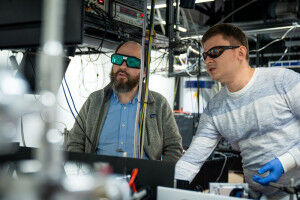
ISTA physicists explain the exceptional energy-harvesting efficiency of perovskites Despite being riddled with impurities and defects, solution-processed lead-halide perovskites are surprisingly efficient at converting solar energy into electricity. Their efficiency is approaching that of silicon-based solar cells, the industry standard.
Materials Science - 04.02.2026
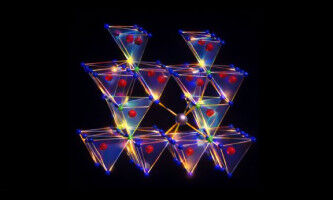
An international collaboration involving researchers from the University of Innsbruck has developed a novel luminescent material that enables particularly robust and precise optical temperature sensing across an exceptionally broad temperature range. Optical luminescence thermometry has been gaining increasing importance, as it allows contactless temperature measurement even under extreme conditions.
Physics - Materials Science - 15.01.2026

How are superconductivity and magnetism connected? A puzzling relation between magnetism and superconductivity in a quantum material has lingered for decades - now a study from TU Wien offers a surprising new explanation. Some materials conduct electricity without any resistance when cooled to very low temperatures.
Health - Materials Science - 17.12.2025
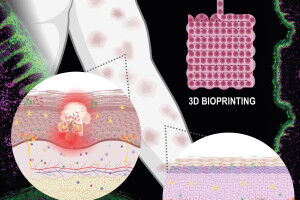
In cooperation with MedUni Vienna, researchers at TU Vienna have investigated how 3D bioprinting can be used specifically to produce complex skin models as part of a recent review. The study shows that, by using suitable biomaterials and precise printing technologies, it is possible to create multi-layered skin structures into which immune cells can also be integrated - a decisive step in advancing research into chronic inflammatory skin diseases such as psoriasis.
Materials Science - Physics - 02.12.2025
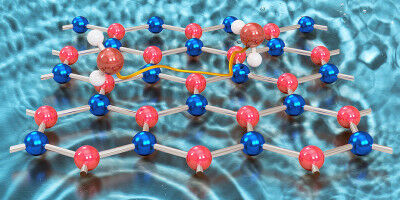
Instead of jumping, water molecules walk: Graz University of Technology and the University of Surrey show how water moves in surprisingly different ways on ultra-thin materials. In a study published in Nature Communications , researchers from Graz University of Technology (TU Graz) and the University of Surrey tested two ultra-thin, sheet-like materials with a honeycomb structure - graphene and hexagonal boron nitride (h-BN).
Materials Science - 20.11.2025
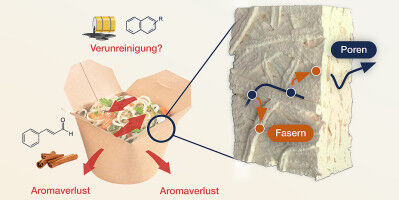
A new AI model developed by TU Graz combines data from laboratory tests with the laws of physics to calculate how well different types of paper protect food from flavour loss and contaminants.
Materials Science - Physics - 22.10.2025
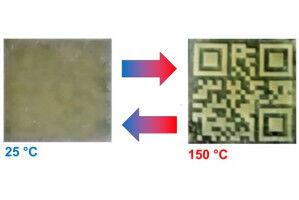
Materials that react to temperature: a development by TU Wien is now significantly expanding the possible applications of 3D printers. 3D printing is extremely practical when you want to produce small quantities of customised components. However, this technology has always had one major problem: 3D printers can only process a single material at a time.
Materials Science - Physics - 06.08.2025

New applications often require new materials. Quite often, materials are needed that do not occur naturally or have very specific properties. In order to find suitable materials for pioneering technologies, it is often not enough to follow the trial-and-error principle and systematically work through the periodic table.
Materials Science - Innovation - 18.07.2025
Advanced nanoindentation: New insights into the mechanical properties of materials
Nanoindentation, an experimental technique for investigating the mechanical properties of materials, has developed rapidly since its introduction in the 1990s with the Oliver-Pharr method. Today, modern methods make it possible to better understand complex challenges such as heterogeneous materials, thermally activated deformation mechanisms or extreme test conditions The current state of the art and modern developments in nanoindentation are the focus of the June issue of the renowned MRS Bulletin.
Physics - Materials Science - 18.06.2025

Improved thermoelectrics: A research team at TU Wien has demonstrated how electrical current can be generated using "traffic jam of electrons" in certain materials. Electricity can be easily converted into heat - every electric cooker does it. But is the opposite also possible? Can heat be converted into electricity - directly, without a steam turbine or similar detours? Physicist Thomas Seebeck answered this question with a clear 'yes' over 200 years ago.
Physics - Materials Science - 26.05.2025

New insights show universal applicability of carbyne as a sensor For the design of future materials, it is important to understand how the individual atoms inside a material interact with each other quantum mechanically. Previously inexplicable vibrational states between carbon chains (carbyne) and nanotubes have puzzled materials scientists.
Materials Science - Physics - 06.05.2025

New property of graphene revealed by ultra-clean airless measurement Environment Graphene is a "miracle material": mechanically extremely strong and electrically highly conductive, ideal for related applications. Using a worldwide unique method physicists at the University of Vienna led by Jani Kotakoski have for the first time made graphene drastically more stretchable by rippling it like an accordion.
Physics - Materials Science - 17.04.2025

An international team led by Fabian Garmroudi has succeeded in producing new, efficient thermoelectric materials that could compete with state-of-the-art materials, offering greater stability and lower cost. Thermoelectric materials enable the direct conversion of heat into electrical energy. This makes them particularly attractive for the emerging "Internet of Things", for example for the autonomous energy supply of microsensors and other tiny electronic components.
Materials Science - Physics - 20.03.2025

The [X-MAT] research team from the Chair of Nonferrous Metallurgy, in collaboration with international partners, has made a significant breakthrough in the development of radiation-resistant materials for nuclear fusion reactors. Their latest study, published in Advanced Science (DOI: 10.1002/advs.202417659), challenges conventional high-entropy alloy (HEA) concept by demonstrating that reduced chemical complexity can still achieve superior radiation tolerance.
Chemistry - Materials Science - 18.03.2025

New method can improve the efficiency and flexibility of displays, solar cells and transistors Scientists at the Institute of Organic Chemistry, University of Vienna, have unveiled an innovative approach for synthesizing azaparacyclophanes (APCs), a class of highly advanced ring-shaped molecular structures with immense potential in material science.
Materials Science - Environment - 27.02.2025

Until now, old clothes have mainly been incinerated. Using adapted processes from paper production, it is possible to recover the cellulose fibres from used clothing and use them to produce cardboard and other packaging materials.
Physics - Materials Science - 20.02.2025

ISTA researchers 3D print high-performance, sustainable thermoelectric materials Rapid, localized heat management is essential for electronic devices and could have applications ranging from wearable materials to burn treatment. While so-called thermoelectric materials convert temperature differences to electrical voltage and vice versa, their efficiency is often limited, and their production is costly and wasteful.
Materials Science - History & Archeology - 19.02.2025

From a tiny electric jolt when touching a doorknob to styrofoam peanuts that cling to a mischievous cat's fur-the well-known and seemingly simple phenomenon of static electricity has puzzled people since antiquity. How could this ubiquitous effect, frequently demonstrated to bedazzled children by rubbing a balloon on their hair, still not be completely understood by scientists? Static electricity goes by multiple names, but scientists prefer to call it 'contact electrification'.
Physics - Materials Science - 03.02.2025

Breakthrough in materials research: an alloy of several metals has been developed that shows practically no thermal expansion over an extremely large temperature interval. Most metals expand when their temperature rises. The Eiffel Tower, for example, is around 10 to 15 centimetres taller in summer than in winter due to its thermal expansion.


