





news
Institute of Science and Technology Austria (ISTA)
Results 21 - 40 of 57.
Life Sciences - Health - 09.04.2025

First report of a new DNA marker outside of microbes, important for sperm function Could it be that one of only three known markers directly targeting the DNA does not exist outside the realm of microbes? Now, researchers led by Xiaoqi Feng at the Institute of Science and Technology Austria (ISTA) have demonstrated that this marker-N4-methylcytosine (4mC)-is essential for sperm development and maturation in the liverwort Marchantia polymorpha , a key organism in plant evolution.
Life Sciences - Health - 03.04.2025

Organoids have revolutionized science and medicine, providing platforms for disease modeling, drug testing, and understanding developmental processes. While not exact replicas of human organs, they offer significant insights. The Siegert group at the Institute of Science and Technology Austria (ISTA) presents a new organoid model that reveals details of the developing nervous system's response to viral infections, such as Rubella.
Life Sciences - 24.03.2025

Why is sleep so important for learning and memory? Neuroscientists from the Csicsvari group at the Institute of Science and Technology Austria (ISTA) provided new insight into this essential function by monitoring neuronal activity in rat brains for up to 20 hours of sleep following spatial learning.
Life Sciences - 05.03.2025

ISTA scientists revise our knowledge about the auxin signaling mechanism in plants According to Karl Popper, a theory or hypothesis can never be definitely proven, but it can be falsified. This implies that it should be rigorously tested for its validity. Scientific progress often involves revisiting and revising established textbook knowledge.
Physics - Materials Science - 20.02.2025

ISTA researchers 3D print high-performance, sustainable thermoelectric materials Rapid, localized heat management is essential for electronic devices and could have applications ranging from wearable materials to burn treatment. While so-called thermoelectric materials convert temperature differences to electrical voltage and vice versa, their efficiency is often limited, and their production is costly and wasteful.
Materials Science - History & Archeology - 19.02.2025

From a tiny electric jolt when touching a doorknob to styrofoam peanuts that cling to a mischievous cat's fur-the well-known and seemingly simple phenomenon of static electricity has puzzled people since antiquity. How could this ubiquitous effect, frequently demonstrated to bedazzled children by rubbing a balloon on their hair, still not be completely understood by scientists? Static electricity goes by multiple names, but scientists prefer to call it 'contact electrification'.
Physics - Computer Science - 11.02.2025

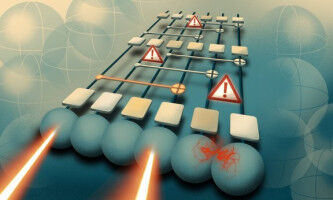
Quantum computers: ISTA physicists achieve optical readout of superconducting qubits Qubits-the fundamental units of quantum information-drive entire tech sectors. Among them, superconducting qubits could be instrumental in building a large-scale quantum computer, but they rely on electrical signals and are difficult to scale.
Life Sciences - Computer Science - 10.02.2025

Why do our mental images stay sharp even when we are moving fast? A team of neuroscientists led by Professor Maximilian Jösch at the Institute of Science and Technology Austria (ISTA) has identified a mechanism that corrects visual distortions caused by movement in animals. The study, conducted in mice, identifies a core function that can be generalized across the vertebrate visual system, including primates such as humans.
Physics - 05.02.2025

Quantum machine models how "false vacuum" decays into "dancing" cosmic bubbles Our Universe might be trapped in a metastable state, called a false vacuum, awaiting a cosmic transition to a more stable true vacuum. Physicists from the University of Leeds, Forschungszentrum Jülich, and the Institute of Science and Technology Austria (ISTA) have modeled this transition, demonstrating how bubbles of true vacuum form and interact.
Life Sciences - Environment - 04.02.2025

Painted lady butterflies are world travelers. The ones we encounter in Europe fly from Africa to Sweden, ultimately returning to areas north and south of the Sahara. But what determines whether some butterflies travel long distances while others travel short distances? A group of scientists, including from the Institute of Science and Technology Austria (ISTA), shows that the different migration strategies are shaped by environmental conditions rather than being encoded in the butterfly's DNA.
Life Sciences - Health - 11.12.2024

ISTA biologists team up with neurosurgeons to unravel the human brain's specificities The black box of the human brain is starting to crack open. Although animal models are instrumental in shaping our understanding of the mammalian brain, scarce human data is uncovering important specificities. In a paper published in Cell , a team led by the Jonas group at the Institute of Science and Technology Austria (ISTA) and neurosurgeons from the Medical University of Vienna shed light on the human hippocampal CA3 region, central for memory storage.
Life Sciences - Mathematics - 06.12.2024

Helping out your neighbor or minding your own business? A challenging choice with different benefits for each decision. Game theory provides guidance in making such choices - from a theoretical perspective. Novel findings by Jakub Svoboda and Krishnendu Chatterjee at the Institute of Science and Technology Austria (ISTA) reveal new network structures that enhance cooperation throughout a system.
Life Sciences - Chemistry - 27.11.2024

New ISTA research shows how tissue development is temporally organized When a vertebrate embryo develops, a group of cells self-organizes into the neural tube, eventually becoming the brain and the spinal cord. This involves specific signals, but how these signals are interpreted by developing cells remains unclear.
Life Sciences - Health - 26.11.2024

ISTA scientists use harmless viruses to investigate the nervous system in frogs Amphibians hold a significant place in evolution, representing the transition from aquatic to terrestrial lifestyles. They are crucial for understanding the brain and spinal cord of tetrapods-animals with four limbs, including humans.
Mathematics - Computer Science - 06.11.2024

ISTA researchers investigate why graph isomorphism algorithms seem to be so effective Graphs are everywhere. In discrete mathematics, they are structures that show the connections between points, much like a public transportation network. Mathematicians have long sought to develop algorithms that can compare any two graphs.
Astronomy & Space - 25.10.2024

A historical supernova documented by Chinese and Japanese astronomers in 1181 has been lost for centuries, until very recently. Yet, the newly found remnant shows some stunning characteristics that are puzzling astronomers. Now, it surrenders its secrets. A team led by Tim Cunningham from the Center for Astrophysics, Harvard & Smithsonian, and Ilaria Caiazzo, Assistant Professor at the Institute of Science and Technology Austria (ISTA), provides the first detailed study of the supernova's structure and speed of expansion in 3D.
Life Sciences - Health - 24.10.2024
Understanding Impacts of Mutations
The human genetic code is fully mapped out, providing scientists with a blueprint of the DNA to identify genomic regions and their variations responsible for diseases. Traditional statistical tools effectively pinpoint these genetic "needles in the haystack," yet they face challenges in understanding how many genes contribute to diseases, as seen in diabetes or schizophrenia.
Life Sciences - Environment - 11.10.2024

ISTA scientists predict-and witness-evolution in a 30-year marine snail experiment Snails on a tiny rocky islet evolved before scientists' eyes. The marine snails were reintroduced after a toxic algal bloom wiped them out from the skerry. While the researchers intentionally brought in a distinct population of the same snail species, these evolved to strikingly resemble the population lost over 30 years prior.
Life Sciences - Health - 10.10.2024

How a bunch of seemingly disorganized cells go on to form a robust embryo Embryo development starts when a single egg cell is fertilized and starts dividing continuously. Initially a chaotic cluster, it gradually evolves into a highly organized structure. An international team of researchers including scientists from the Institute of Science and Technology Austria (ISTA) has provided new insights into the process, emphasizing the critical role of both chaos and order.
Health - Life Sciences - 25.09.2024

Almost everyone knows about HIV. Fewer people know about its relative, HTLV-1. However, HTLV-1 can cause serious illnesses, including cancer. To develop ways to combat this virus, understanding its structure is essential. Martin Obr and Florian Schur from the Institute of Science and Technology Austria (ISTA) and US colleagues now show the virus in close-up in a new paper, published in Nature Structural & Molecular Biology .


